TEHRAN/RAWALPINDI, May 23: Chief of Defence Forces and Chief of Army Staff Field Marshal Asim Munir has arrived in Tehran as Pakistan pushes ahead with mediation efforts aimed at ending the Iran-US conflict, the Inter-Services Public Relations said.
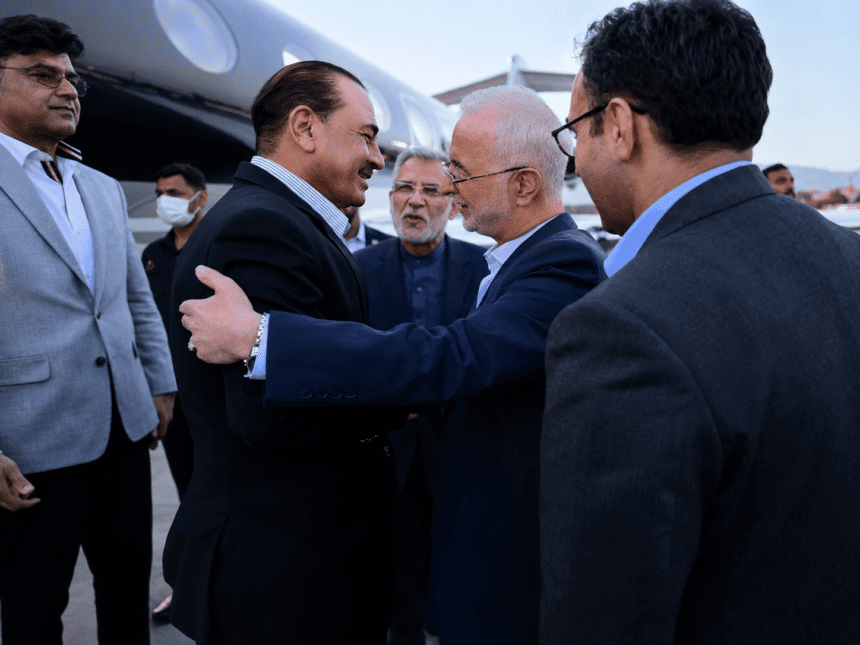
According to ISPR, Field Marshal Munir reached the Iranian capital on Friday evening with a formal delegation. He was received at the airport by Iran’s Interior Minister Eskandar Momeni, while Pakistan’s Interior Minister Mohsin Naqvi was also present at the reception.
The visit comes at a sensitive point in the regional crisis, with diplomatic channels involving Pakistan and Qatar working to prevent a wider conflict. Reports suggest the talks are focused on ending hostilities, reopening the Strait of Hormuz, and creating space for broader negotiations, including possible discussions linked to Iran’s nuclear programme.
Pakistan’s latest diplomatic push follows earlier rounds of contact between Tehran and Washington in which Islamabad played a quiet but increasingly visible role. Field Marshal Munir has been described in international reporting as one of the central figures in Pakistan’s mediation track, with his Tehran visit seen as an attempt to move the process from exploratory discussions toward a more concrete framework.
The United States has publicly signalled cautious optimism, though not much more than that. US Secretary of State Marco Rubio said there had been “slight progress” in the negotiations, while also making clear that major differences remain unresolved.
The Strait of Hormuz remains one of the biggest pressure points in the crisis. Any prolonged closure or disruption there would not only deepen tensions between Iran and the US but could also shake global energy markets, given the waterway’s central role in oil shipments.
For Pakistan, the visit carries both diplomatic and security weight. Islamabad shares a long border with Iran and has repeatedly warned that instability in the Gulf or across its western frontier could directly affect Pakistan’s own security and economy. That makes de-escalation not just a foreign policy goal, but a practical national concern.
There was no immediate official word on the substance of Field Marshal Munir’s expected meetings in Tehran. Still, the timing of the visit suggests Islamabad is trying to keep the diplomatic window open before the conflict hardens further.
Regional officials and observers are now watching whether the Tehran meetings can produce a written understanding, even a limited one, that would stop further escalation and allow a fresh round of talks. For now, the mood remains cautious. The fact that talks are still happening, though, is being read in diplomatic circles as a sign that neither side has fully shut the door on a negotiated exit.