New Delhi: The founder of a fast-growing Indian Gen Z-focused social media account has alleged that the platform came under pressure after it rapidly gained popularity for satirical posts on youth issues, politics and governance.
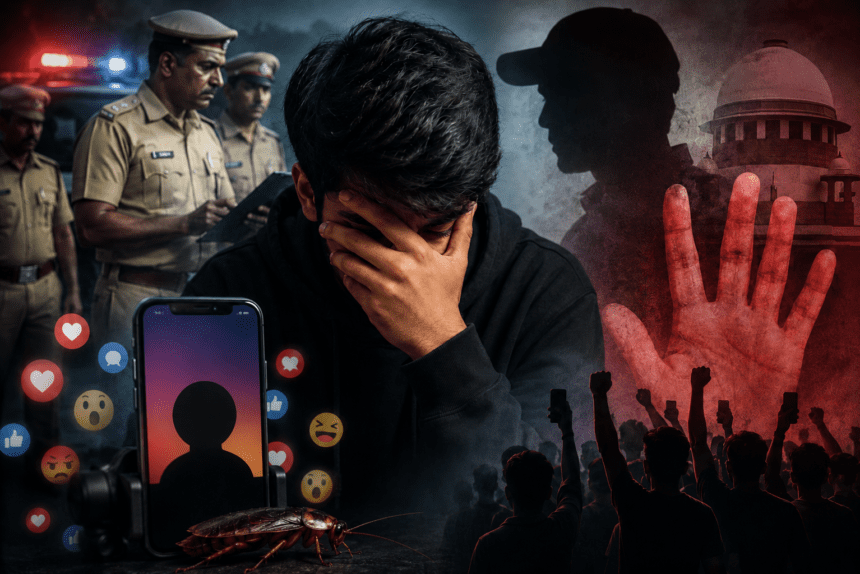
The account, called Cockroach Janta Party, was founded by Abhijeet Dipke and quickly drew attention online for using humour and satire to speak about unemployment, inflation, exam paper leaks, gender equality, media freedom and other concerns affecting young Indians. The account reportedly gained more than 22 million Instagram followers within days, turning it into one of the most talked-about digital youth platforms in India.
Dipke alleged that after the account’s sudden rise, its website was taken down, its X account was withheld in India, its Instagram account was compromised and his family received threats. These allegations have not been independently verified, and Indian authorities have not publicly confirmed action against the website or Instagram page.
The founder said the account was meant to give young people a space to express frustration through satire rather than formal politics. Its posts used memes, sharp one-liners and Gen Z-style language to discuss issues that many young Indians complain are ignored by mainstream political debate.
The allegations have triggered fresh discussion over online speech, political satire and digital rights in India. Supporters of the account say its popularity shows that young people are looking for new ways to talk about social and economic pressures. Critics, however, have questioned the speed of its growth and the nature of its online support.
Indian minister Kiren Rijiju dismissed the movement and raised questions about its follower base, suggesting foreign-driven popularity. Dipke rejected that claim, saying 94% of the account’s followers are from India.
India’s home and IT ministries reportedly did not respond to requests for comment. Without an official statement, it remains unclear whether the account faced state action, platform-level enforcement, hacking, coordinated complaints or some mix of these factors.
The case reflects a wider tension in digital politics: satire can spread faster than traditional campaigning, especially among younger audiences, but viral political content can also attract scrutiny very quickly. In India, where social media plays a major role in elections, protests and public debate, even a meme account can become politically sensitive once it reaches millions.
For now, Dipke’s allegations remain claims pending further confirmation. But the controversy has already raised a bigger question: how much space do young people have online to criticize power, joke about politics and organize around shared frustrations without facing pressure?