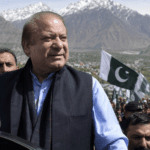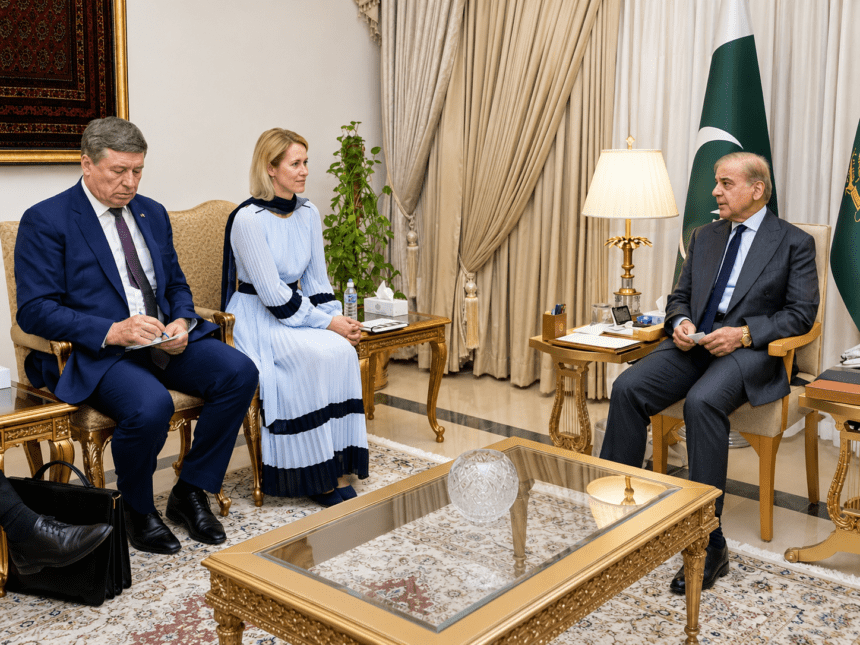
ISLAMABAD — Prime Minister Shehbaz Sharif and top European Union diplomat Kaja Kallas held high-level talks at the PM House on Monday, signaling a major push to deepen strategic and economic ties amid shifting global geopolitics.
Kallas, the Vice-President of the European Commission and EU High Representative for Foreign Affairs and Security Policy, is visiting the capital at the invitation of Deputy Prime Minister and Foreign Minister Ishaq Dar to co-chair the 8th round of the EU-Pakistan Strategic Dialogue.
Addressing a joint press conference alongside Foreign Minister Dar, Kallas underscored Pakistan’s status as a major regional power and a vital economic ally, revealing that the EU remains Pakistan’s largest export destination.
“Our market is actually larger than the US and China combined,” Kallas stated, noting that the current bilateral trade volume stands at €12 billion.
Central to the economic discussions was Pakistan’s status as the world’s leading beneficiary of the EU’s Generalised Scheme of Preferences Plus (GSP+) framework, which grants duty-free or low-duty access to European markets. However, the EU envoy issued a clear reminder that this preferential access hinges on strict compliance with 27 international conventions.
“Continued preferential access to the EU market depends on progress in implementing the international conventions underpinning the scheme,” Kallas warned, explicitly calling for “tangible progress” on good governance, environmental protection, labor regulations, and human rights.
The dialogue placed heavy emphasis on regional security, with the EU offering strong praise for Pakistan’s backchannel diplomacy in the Middle East. Kallas commended Islamabad for acting as the “main mediator” between the United States and Iran.
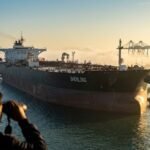
“Your diplomatic efforts have helped prevent a return to full-blown war on several occasions, and these efforts are much recognized and appreciated across Europe,” Kallas told Pakistani officials. She noted that Pakistan’s mediation has opened a tenuous diplomatic window to sustain ceasefires and secure the strategic Strait of Hormuz, though she cautioned that long-term stability requires deeper talks regarding Tehran’s nuclear stockpile.
The high-stakes meetings also touched upon pressing security concerns closer to home. Addressing recent military friction along the western border, Kallas acknowledged Pakistan’s inherent right to self-defense under international law but urged restraint to mitigate grave humanitarian consequences. On his part, Foreign Minister Dar emphasized that cross-border terrorism emanating from Afghan soil remains a top national security concern for Islamabad.
Furthermore, Minister Dar apprised the EU delegation of Pakistan’s concerns regarding “unprovoked Indian aggression” and reiterated Islamabad’s principal stance that the Jammu and Kashmir dispute must be resolved via UN Security Council resolutions. He also briefed Kallas on the Indus Water Treaty (IWT), stating that Pakistan’s position was “vindicated” by a recent supplemental award by the Permanent Court of Arbitration regarding the Ratle and Kishanganga hydroelectric projects, which curbs India’s water-control capabilities on western rivers.
Both sides expressed high satisfaction with the momentum of bilateral relations, pointing out that the minimal six-month gap between this dialogue and the last one in November 2025 represents the shortest interval in the history of EU-Pakistan relations.
Beyond hard security and trade, the leaders agreed to expand cooperation into climate resilience, clean energy, and digital infrastructure. Kallas also lauded Pakistan for topping the EU’s global Erasmus Mundus Scholarship rankings for the fifth consecutive year, highlighting strong people-to-people connections.
Officials are now reviewing a new “strategic vision” document. Building upon the 2019 Strategic Engagement Plan, the proposed framework aims to permanently transition EU-Pakistan relations into a more comprehensive, structured political and institutional partnership.