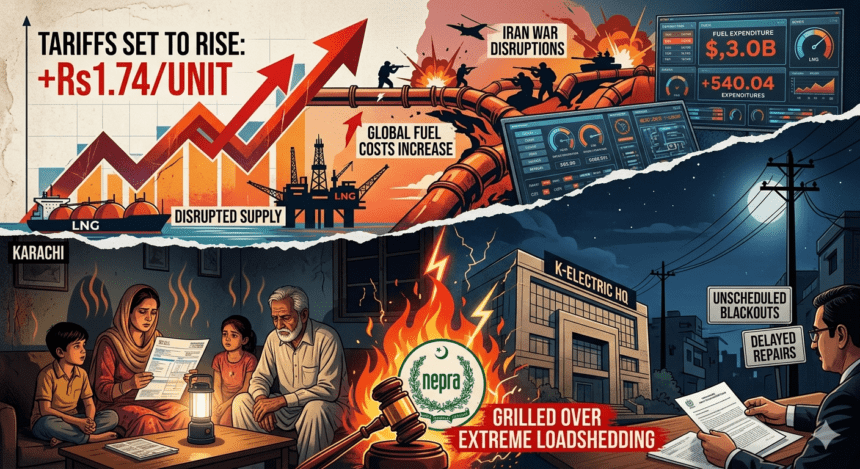
ISLAMABAD — Electricity tariffs are likely to surge by Rs1.74 per unit in next month’s billing cycle following an official request to recover over Rs16 billion in additional fuel costs from power consumers, regulatory sources confirmed on Tuesday.
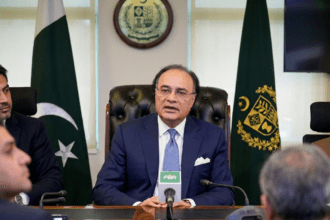
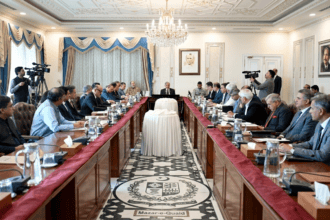
The National Electric Power Regulatory Authority (NEPRA) conducted a public hearing to review the Central Power Purchasing Agency’s (CPPA) petition seeking an additional fuel cost adjustment (FCA) for power consumed in April, to be recovered in June 2026.
During the hearing, CPPA Chief Executive Officer Rehan Akhtar explained that while the reference fuel cost for April had been locked at Rs8.25 per unit, the actual cost spiked to Rs9.975 per unit. Akhtar primarily attributed this variation to the ongoing US-Iran war, which caused severe disruptions in global liquefied natural gas (LNG) supply chains. Technical bottlenecks in transmitting cheaper electricity generated in Sindh to energy-starved load centers in the upcountry further exacerbated the fuel cost adjustment. The net impact on consumers will settle at Rs1.74 per unit as a previous minor negative adjustment officially expired.
To mitigate an even steeper tariff hike, the CPPA chief noted that the government strictly managed the power load to limit the use of expensive furnace oil and diesel. Furthermore, special arrangements were made for LNG imports, with the government subsidizing its price at Rs2,000 per unit instead of the standard Rs3,500 per unit. Technical complications and forced outages at the Karachi Nuclear Power Plant Unit-2 (K-2) also drove up the FCA, alongside past financial claims from the plant totaling Rs3.4 billion.
On national grid dynamics, Akhtar reported that interconnected power supply to Karachi ultimately protected consumers nationwide. Had K-Electric not drawn power from the national grid, it would have triggered a collective tariff shock of Rs4.26 per unit across the country due to capacity and fuel price variations for April.
The hearing also highlighted a sharp 8.5 percent year-on-year drop in overall power consumption for April. Demand plummeted by 15 percent in the domestic sector, 9.5 percent in commercial, and 53 percent in agriculture. Conversely, industrial power consumption bucked the trend, growing by 13.5 percent due to gas disconnections for captive power units and a specialized incremental tariff package. However, industrial representatives from Karachi criticized the package during the hearing, calling for an immediate review due to a “faulty design” that benefited only a select few.
Separately, NEPRA took stern notice of the intense power crisis in Karachi, demanding a comprehensive report from K-Electric regarding “excessive loadshedding” during a period of scorching summer temperatures. The regulator expressed serious concern over a barrage of public complaints originating from both high-loss and low-loss residential segments. NEPRA officials admonished the power utility, stating that localized power cuts triggered by technical faults were being omitted from official load management schedules, a practice that directly violates established regulatory performance standards.