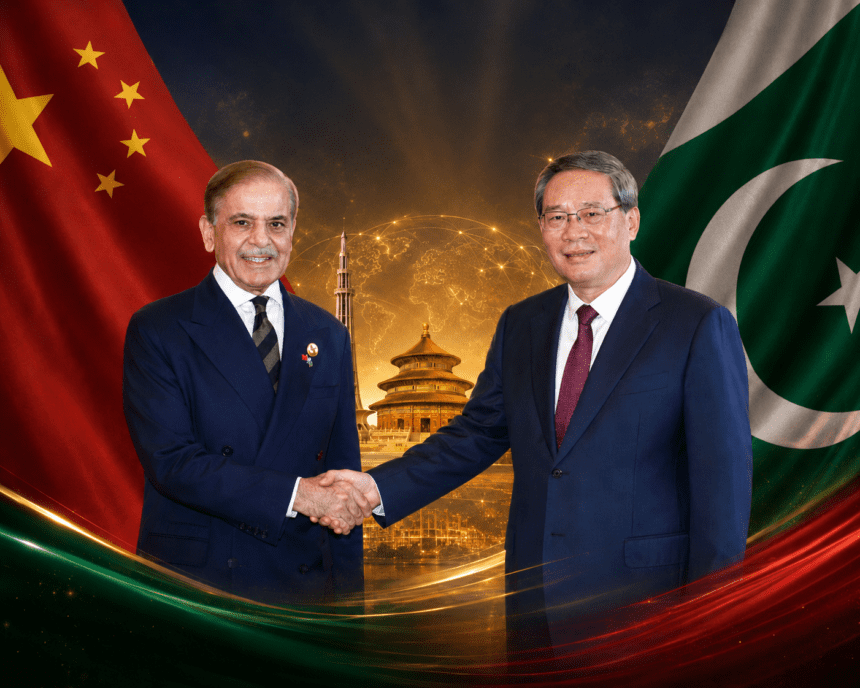
ISLAMABAD, May 20, 2026 — Prime Minister Shehbaz Sharif on Wednesday reaffirmed Pakistan’s commitment to further strengthening its strategic partnership with China, saying the relationship between the two countries remained rooted in trust, shared interests and a long record of cooperation.
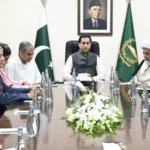
The prime minister made the remarks during a meeting in Islamabad with a high-level Chinese delegation led by Cai Dafeng, Vice Chairman of the Standing Committee of the 14th National People’s Congress. The delegation is visiting Pakistan as both countries mark the 75th anniversary of the establishment of diplomatic relations.
According to the Prime Minister’s Office, Shehbaz described Pakistan-China ties as a “historic, time-tested All-Weather Strategic Cooperative Partnership,” noting that the two sides had developed a rare bond over seven and a half decades. It’s a phrase Pakistani leaders use often, yes, but in Islamabad’s diplomatic language it carries real weight: China remains Pakistan’s closest strategic partner, a major investor, and a key voice in regional and global forums.
The meeting was attended by National Assembly Speaker Sardar Ayaz Sadiq, Deputy Prime Minister and Foreign Minister Ishaq Dar, Planning Minister Ahsan Iqbal, Information Minister Attaullah Tarar, Special Assistant Tariq Fatemi and Foreign Secretary Amna Baloch.
Shehbaz appreciated China’s “constructive role” in promoting peace and stability in South Asia and the Middle East, while also reaffirming Pakistan’s commitment to regional harmony and multilateral cooperation. Cai Dafeng, for his part, thanked the Pakistani leadership for the warm welcome and conveyed Beijing’s continued interest in deepening ties with Islamabad.
A major part of the discussion revolved around the next phase of the China-Pakistan Economic Corridor, or CPEC, the flagship project of China’s Belt and Road Initiative in Pakistan. The prime minister said Pakistan was determined to ensure the success of CPEC’s second phase, which officials have increasingly linked with industrial cooperation, agriculture, technology, energy and job creation rather than only roads and power plants.
The timing of Cai’s visit is important. Earlier in the day, Pakistan’s Senate passed a resolution commemorating 75 years of diplomatic relations with China, calling the partnership a symbol of “enduring brotherhood” and “ever-deepening cooperation.” The Chinese delegation also witnessed the Senate proceedings, a gesture clearly meant to underline that the relationship is not limited to government-to-government contacts alone.
Deputy Prime Minister Ishaq Dar, speaking before the adoption of the Senate resolution, said the Pakistan-China partnership had “stood all tests of time” and was based on mutual trust, mutual respect and mutual benefit. He also welcomed Cai and the accompanying delegation to the Senate, framing the anniversary as both a celebration and a reminder of the work still ahead.
The visit comes at a moment when Islamabad is trying to revive investor confidence, speed up delayed development projects and reassure Beijing over the security of Chinese nationals working in Pakistan. Security has remained a sensitive issue in recent years, especially after militant attacks targeting Chinese workers and CPEC-linked projects. International reporting has noted that Beijing has repeatedly pressed Pakistan to strengthen protection for Chinese citizens and investments.
Still, both capitals appear keen to push the relationship into a more economic, investment-driven phase. Recent diplomatic exchanges have focused on agriculture, mining, industrial cooperation and upgraded CPEC projects, with China signaling interest in broader cooperation beyond traditional infrastructure.
For Pakistan, the message from Wednesday’s meeting was straightforward: Islamabad wants Beijing to remain at the center of its foreign policy and economic recovery plans. For China, the visit offered another opportunity to show that its partnership with Pakistan is steady, public and politically backed across institutions.
As the 75th anniversary events continue, officials from both sides are expected to keep the focus on CPEC’s next stage, parliamentary exchanges, regional coordination and people-to-people links — the softer, but often overlooked, side of a relationship usually described in strategic terms.