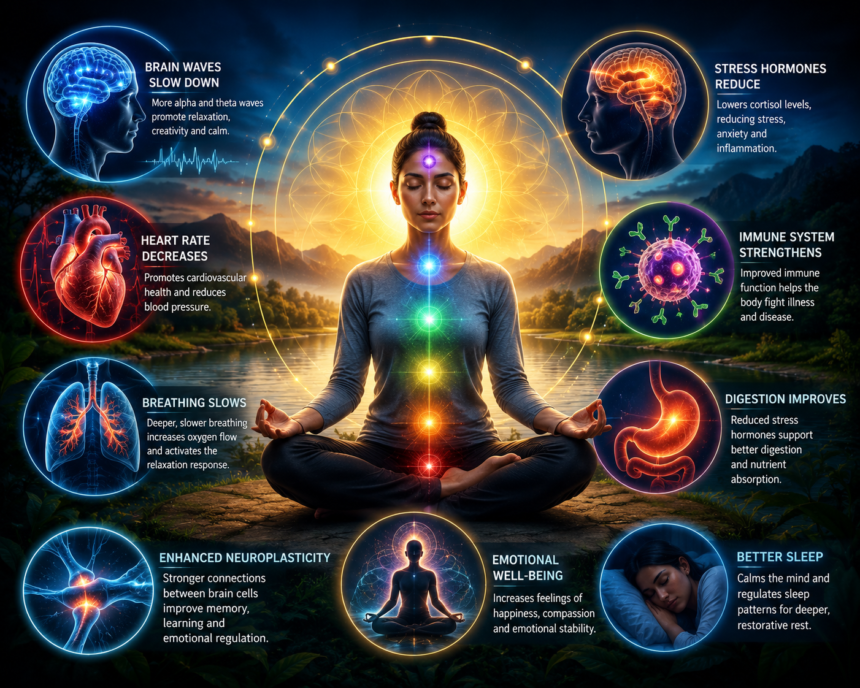
Deep meditation is more than just relaxation—it triggers measurable changes in the brain and body that can improve mental and physical health over time.
1. The Brain Slows Down and Becomes More Focused
During deep meditation, brain activity shifts from fast, stressful patterns to calmer waves. This helps improve focus, attention, and emotional control. Areas of the brain linked to stress and anxiety become less active.
2. Stress Hormones Decrease
Meditation reduces the production of cortisol, the main stress hormone. Lower cortisol levels help reduce anxiety, improve mood, and protect the body from long-term stress damage.
3. Heart Rate and Blood Pressure Drop
The body enters a relaxed state, causing:
- Slower heart rate
- Lower blood pressure
- Improved circulation
This is one reason meditation is linked to better heart health.
4. Breathing Becomes Deeper and Slower
Deep meditation naturally slows breathing. This increases oxygen efficiency in the body and activates the parasympathetic nervous system (the “rest and repair” mode).
5. Nervous System Enters Calm Mode
The body shifts from “fight or flight” mode to “rest and digest” mode. This helps reduce muscle tension, headaches, and physical fatigue.
6. Improved Emotional Balance
Regular meditation strengthens areas of the brain linked to emotional regulation. Over time, people often feel:
- Less anger
- Less anxiety
- More mental clarity
7. Long-Term Benefits
With consistent practice, deep meditation may help:
- Improve sleep quality
- Strengthen immunity
- Reduce chronic stress-related risks
- Enhance overall well-being
Conclusion
During deep meditation, your body enters a scientifically measurable state of calm where the brain, heart, and nervous system all shift toward healing and balance. Even a few minutes daily can create noticeable benefits over time.
Short takeaway:
Deep meditation helps the body “reset” from stress and move into a natural healing mode.