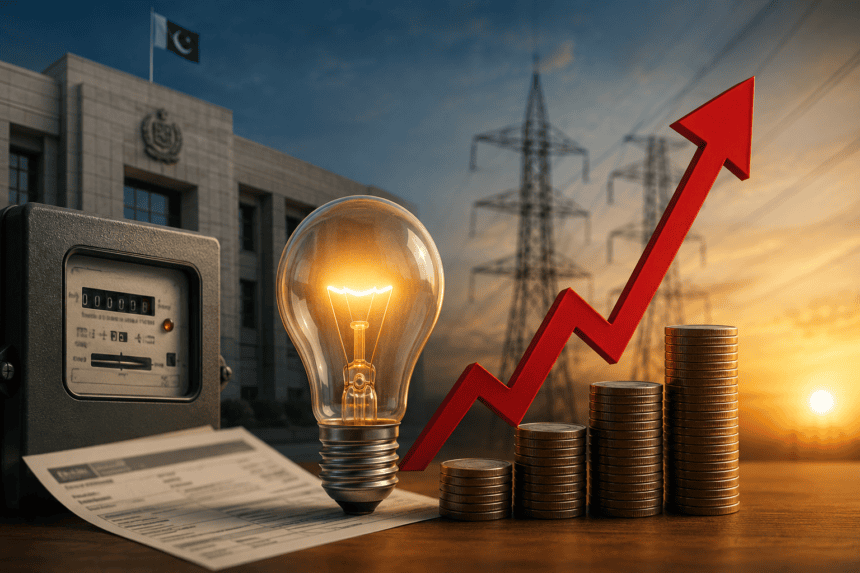
The National Electric Power Regulatory Authority (NEPRA) has greenlit a fresh hike in electricity rates, compounding the financial burden on consumers already grappling with record-high inflation. The increase comes through a combination of monthly fuel charge adjustments and quarterly tariff adjustments, set to reflect on upcoming utility bills.
This latest adjustment means households will be paying more for the same amount of power, with the hike specifically targeting the upcoming billing cycle. For a middle-class family already cutting back on non-essential spending, this move forces a choice between basic necessities and keeping the lights on.
The regulator defended the move as a necessary step to recover costs incurred by power distribution companies. These costs, according to official filings, stem from shifts in the fuel mix and the rising price of imported coal and gas used in thermal power plants.
“We are simply passing on the costs of generation,” said a power sector official familiar with the decision, speaking on condition of anonymity. “The system cannot absorb these losses indefinitely without risking a complete collapse of the supply chain.”
But critics see it differently. The persistent reliance on expensive, imported fuel remains the primary culprit, and experts argue that the government has failed to pivot toward cheaper, domestic alternatives. Instead of fixing the structural inefficiencies in the grid—such as massive line losses and theft—the burden is routinely offloaded onto the consumer.
The timing is particularly sharp. With the economy struggling to stabilize under IMF-mandated reforms, the hike serves as a reminder of the limited fiscal space available to the current administration.
While the government maintains that these adjustments are essential to keep the power sector afloat, the reality for the end-user is a shrinking disposable income. Whether these adjustments will finally stabilize the sector or simply push more consumers toward off-grid alternatives remains the looming question for the power ministry.