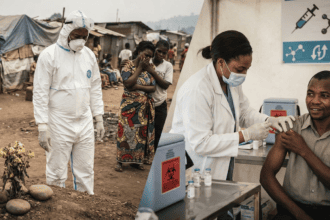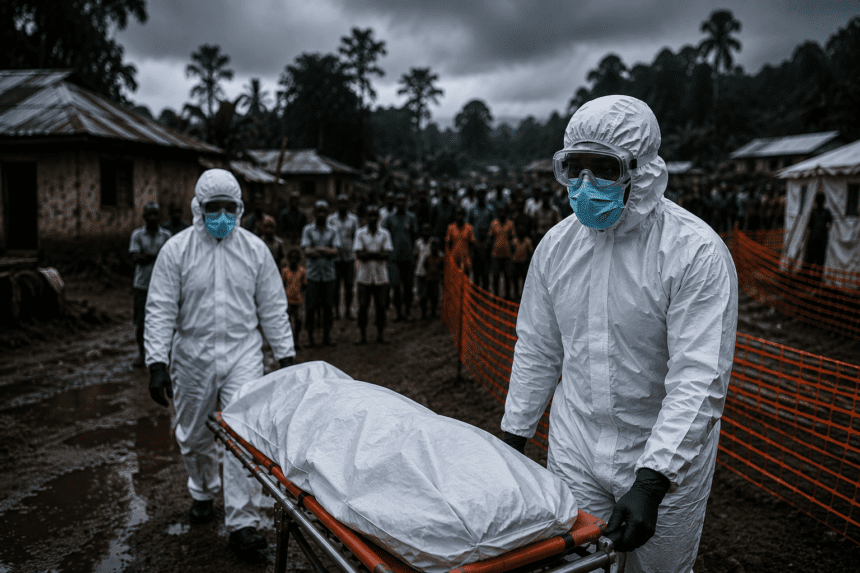
The Ebola outbreak in eastern Democratic Republic of the Congo (DRC) is worsening, with health workers reporting that many patients are reaching treatment centers too late to be saved. The outbreak, caused by the rare Bundibugyo strain of the virus, has spread across multiple provinces amid conflict, population displacement, and weak healthcare infrastructure.
According to the latest figures, the DRC has recorded more than 450 confirmed cases and over 80 deaths, while neighboring Uganda has also reported infections linked to cross-border transmission. Health officials warn that rapid community spread is outpacing containment efforts in several affected areas.
The outbreak has been particularly challenging because there is currently no approved vaccine or specific treatment for the Bundibugyo strain. Delayed diagnosis, limited testing capacity, misinformation, and insecurity have further complicated response efforts.
In response, the World Health Organization (WHO) and the Africa CDC have launched a $518 million continental response plan aimed at strengthening surveillance, treatment, contact tracing, and border screening. International health agencies are urging communities to seek medical care immediately when symptoms appear, as early treatment significantly improves survival chances.