Pakistan’s Foreign Office has issued a sharp rebuke to New Delhi, warning that any unilateral move to obstruct the flow of the Indus River system will trigger “far-reaching consequences.” The statement follows recent remarks by Indian officials suggesting a review of the Indus Waters Treaty (IWT) and potential restrictions on water sharing.
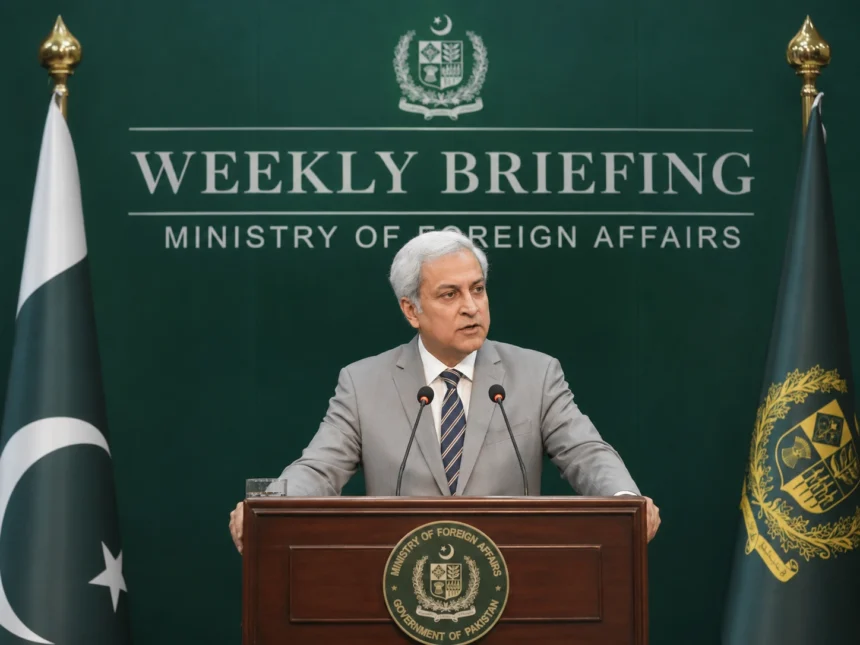
Foreign Office spokesperson Mumtaz Zahra Baloch made it clear Thursday that the 1960 treaty is not a document that can be unilaterally altered or discarded. “The Indus Waters Treaty is a binding international agreement,” she told reporters. “Pakistan expects India to adhere to its commitments, as any attempt to weaponize water will only destabilize a fragile regional peace.”
The friction stems from comments by Indian leadership suggesting that the existing water-sharing mechanism—brokered by the World Bank over six decades ago—no longer serves India’s interests. For Pakistan, however, the stakes are existential. The Indus system is the country’s primary agricultural lifeline, feeding millions and providing the bulk of its national water supply.
Analysts suggest that rhetoric regarding the treaty often surges during domestic political cycles in India, yet the legal framework remains rigid. The IWT has survived three major wars and countless border skirmishes precisely because both sides rely on the technical mediation provided by the World Bank.
“Water is not a bargaining chip,” said a senior hydrological expert based in Islamabad. “The geography of the Indus basin leaves Pakistan downstream. If India chokes the flow, the impact on Pakistan’s food security would be immediate and catastrophic.”
While India has frequently raised concerns regarding the design of Pakistani hydroelectric projects, it has stopped short of actually violating the treaty’s core water-sharing provisions. New Delhi’s recent posturing appears aimed at pressuring Islamabad on other security fronts, but the Foreign Office is signaling that water is a “red line” that cannot be crossed.
For now, the treaty remains intact. But as both nations trade warnings, the diplomatic environment surrounding the world’s most successful water-sharing agreement is arguably at its most strained point in years.