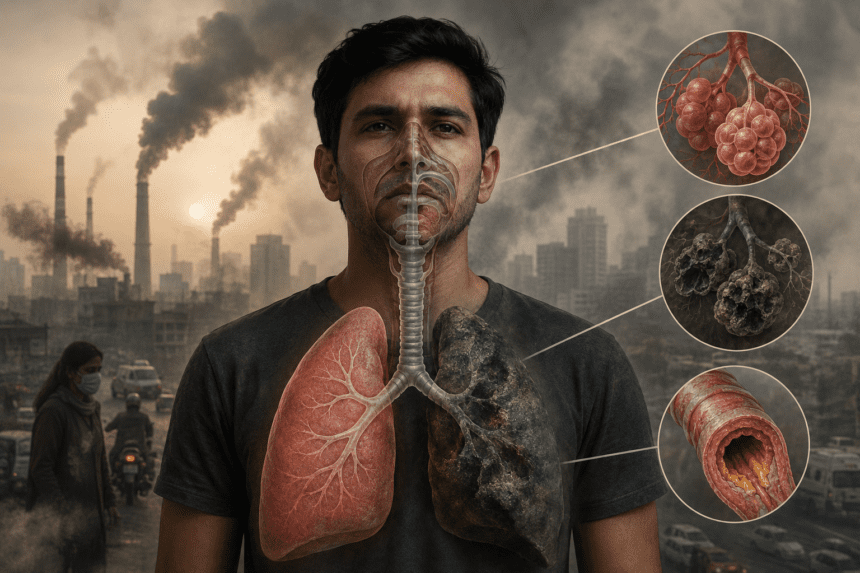
A Deep Look at the Silent Threat We Breathe Every Day
Air is something we rarely think about—until it becomes difficult to breathe. Every second of our lives depends on clean air entering our lungs and supplying oxygen to the body. But in many cities today, the air is no longer clean. It is filled with invisible pollutants that slowly damage the respiratory system over time.
The most dangerous part of air pollution is that it does not harm instantly. Instead, it creates silent, long-term damage that builds up gradually inside the lungs.
This article explains how air pollution affects your lungs, what happens inside your body, and why it is considered one of the biggest hidden health risks today.
🫁 1. What Happens When You Breathe Polluted Air
Every time you breathe, air enters through your nose or mouth and travels down into your lungs. In clean air, oxygen passes smoothly into the bloodstream. But polluted air contains harmful particles that interfere with this process.
🌫️ Common pollutants include:
- Fine particulate matter (PM2.5 and PM10)
- Smoke from vehicles and factories
- Dust and industrial emissions
- Harmful gases like nitrogen dioxide and carbon monoxide
These particles are so small that many of them cannot be seen with the naked eye—but they can easily enter deep into your lungs.
🧠 2. How Pollution Attacks the Lungs
Your lungs are designed with tiny air sacs called alveoli, which are responsible for transferring oxygen into the blood. These delicate structures are extremely sensitive.
⚠️ When polluted air enters:
- Particles settle in the airways
- Lung tissues become irritated
- Inflammation begins in the respiratory tract
- Mucus production increases
Over time, this constant irritation damages the natural defense system of the lungs.
🔥 3. Inflammation: The First Stage of Damage
One of the earliest effects of air pollution is inflammation.
🫁 What inflammation does:
- Swells the airways
- Narrows breathing passages
- Makes breathing feel heavier
At first, this may feel like:
- Mild cough
- Throat irritation
- Shortness of breath during activity
Many people ignore these early signs, not realizing that damage has already begun.
🧬 4. Long-Term Damage to Lung Function
If exposure continues over months or years, the effects become more serious.
⚠️ Long-term consequences include:
- Reduced lung capacity
- Chronic bronchitis
- Worsening asthma
- Frequent respiratory infections
🧠 What is happening inside:
- Alveoli get damaged
- Oxygen exchange becomes less efficient
- Lungs lose elasticity
This means the body receives less oxygen even during normal breathing.
🫀 5. How It Affects the Whole Body
Air pollution does not stop at the lungs. Once harmful particles enter the bloodstream, they can affect other organs as well.
💔 Possible effects:
- Increased risk of heart disease
- Higher blood pressure
- Fatigue and low energy
- Reduced immunity
Because oxygen is essential for every cell, poor lung function affects the entire body.
😷 6. Why Air Pollution Damage Is “Silent”
One of the most dangerous aspects of air pollution is how slowly it works.
⚠️ Why people don’t notice early damage:
- Symptoms start very mild
- The body adapts gradually
- Damage builds over years
- No immediate pain occurs
By the time breathing problems become serious, lung function may already be significantly reduced.
🌆 7. Everyday Exposure Without Realization
Most people are exposed to polluted air daily without realizing the full risk.
Common exposure sources:
- Traffic congestion
- Industrial smoke
- Construction dust
- Indoor pollution (cooking smoke, poor ventilation)
Even indoor air can sometimes be more polluted than outdoor air.
🛡️ 8. How to Protect Your Lungs
While pollution cannot be completely avoided, its effects can be reduced.
Practical steps:
- Wear a mask in high-smog areas
- Avoid outdoor activity during peak pollution hours
- Keep indoor spaces ventilated
- Use air purifiers if possible
- Increase intake of antioxidants (fruits and vegetables)
- Stay hydrated to support lung function
Small daily habits can significantly reduce long-term damage.
🧾 FINAL CONCLUSION
Air pollution is not just an environmental issue—it is a serious health threat that directly affects the lungs and entire body. The damage happens slowly, silently, and often without clear early symptoms.
Your lungs work every second of your life, and every polluted breath adds a small amount of stress to them. Over time, this becomes a serious health burden.
The most important step is awareness. Once you understand how pollution affects your body, you can take simple but powerful steps to protect yourself.
Clean air is not a luxury—it is a necessity for survival and long-term health.