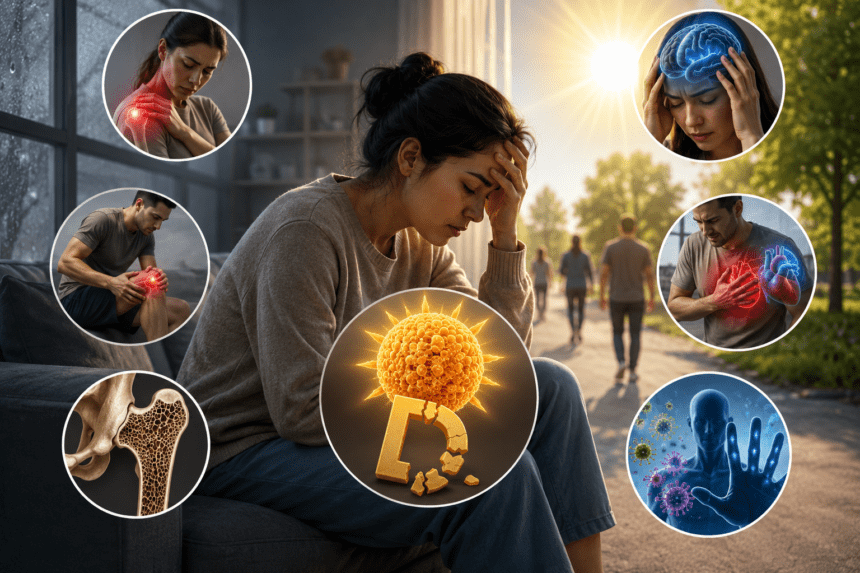
Vitamin D is one of the most important nutrients for the human body. It helps keep bones strong, supports the immune system, and plays a role in overall health. However, vitamin D deficiency is increasing rapidly and is now considered a major global health concern.
1. Limited Sun Exposure
Most people spend long hours indoors due to work, study, and screen time. Since sunlight is the main source of vitamin D, reduced exposure leads to deficiency in many individuals.
2. Weak Bones and Muscle Problems
Vitamin D helps the body absorb calcium. When levels are low, bones can become weak, and people may experience bone pain, muscle weakness, and higher risk of fractures.
3. Weak Immune System
Low vitamin D levels can affect the immune system, making the body more vulnerable to infections and frequent illnesses.
4. Constant Fatigue
People with vitamin D deficiency often feel tired, low in energy, and less active throughout the day.
5. Impact on Mental Health
Vitamin D also supports brain function. Deficiency may be linked to low mood, stress, and lack of focus.
6. Why It Is Becoming More Common
Modern lifestyle habits such as indoor work, less outdoor activity, poor diet, and pollution blocking sunlight are increasing the risk of vitamin D deficiency worldwide.
7. Natural Sources of Vitamin D
Sunlight exposure is the best natural source. Other sources include fish, eggs, and fortified dairy products.
Conclusion
Vitamin D deficiency is becoming a serious health threat due to modern lifestyle changes. Simple habits like spending time in sunlight and maintaining a balanced diet can help prevent this growing problem.