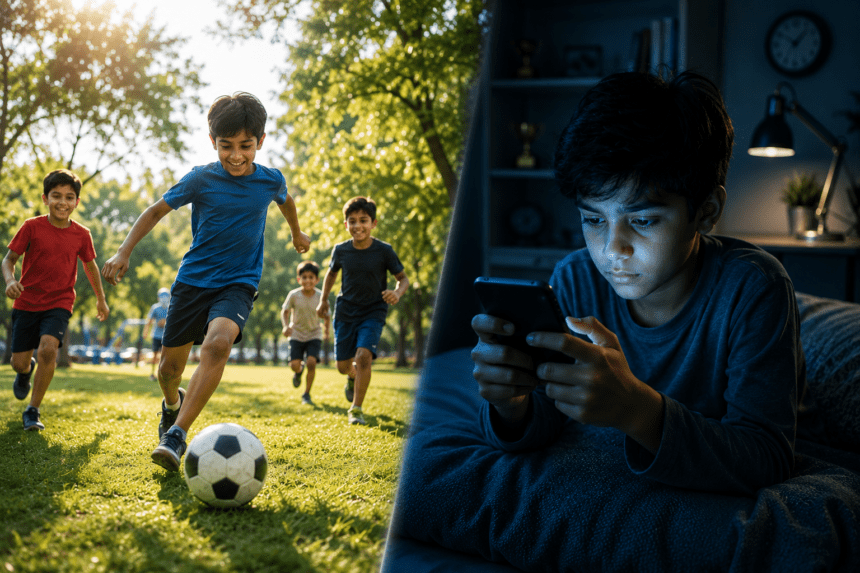
Here’s a detailed look at why outdoor games are far better for kids than mobile games.
1. Improves Physical Health
Outdoor games like cricket, football, running, and skipping keep children physically active. These activities help:
- Strengthen muscles and bones
- Improve stamina and energy levels
- Reduce risk of childhood obesity
- Boost overall fitness and immunity
In contrast, mobile games involve long sitting hours, which can lead to weight gain, poor posture, and health issues at an early age.
2. Supports Mental Development
Playing outdoors allows kids to think, plan, and react quickly. Games like tag or team sports improve:
- Decision-making skills
- Problem-solving abilities
- Focus and attention span
Mobile games may improve hand-eye coordination, but they often overstimulate the brain without building real-world thinking skills.
3. Enhances Social Skills
Outdoor games are usually played in groups, helping children learn how to interact with others. This builds:
- Teamwork and cooperation
- Communication skills
- Leadership qualities
- Ability to handle winning and losing
Mobile gaming, especially solo play, often isolates children and reduces face-to-face interaction.
4. Reduces Stress and Improves Mood
Fresh air, sunlight, and physical movement help release feel-good hormones like endorphins. Outdoor play:
- Reduces anxiety and stress
- Improves mood naturally
- Helps children feel more relaxed and happy
Excessive mobile use, however, can sometimes lead to irritability, frustration, and addiction-like behavior.
5. Better Sleep Quality
Children who play outside during the day tend to sleep better at night. Physical activity helps regulate the body clock, leading to:
- Deeper sleep
- Faster sleep onset
- Better energy the next day
Too much screen time, especially before bed, can disturb sleep patterns due to blue light exposure.
6. Builds Creativity and Imagination
Outdoor environments encourage children to explore and create their own games. This helps:
- Develop imagination
- Encourage curiosity
- Promote independent thinking
Mobile games are often structured and limited, reducing creative freedom.
7. Teaches Real-Life Skills
Outdoor play helps children learn important life lessons such as:
- Discipline
- Patience
- Fair play
- Responsibility
These skills are essential for success in school and future life.
Conclusion
While mobile games can be fun in moderation, they should never replace outdoor activities. Outdoor games play a vital role in shaping a child’s physical health, emotional well-being, and social development. Encouraging children to spend more time outside is one of the best investments in their future.
A healthy balance is important—but outdoor play should always come first.