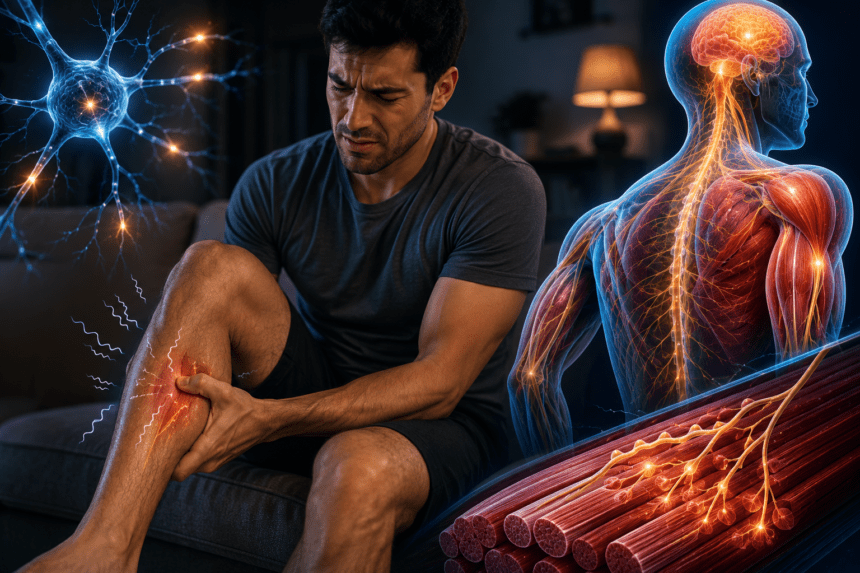
Muscle twitching is a common condition where small muscles in the body start moving or shaking on their own without any voluntary control. It can happen in the eyes, arms, legs, or other parts of the body.
In most cases, it is harmless and temporary, but it can be linked to lifestyle habits or minor health issues.
1. Stress and Anxiety
When the nervous system is under stress, it can become overactive. This may cause small muscle spasms or twitching in different parts of the body.
2. Lack of Sleep
Poor sleep affects nerve and muscle function. When the body is not properly rested, muscles may start twitching.
3. Too Much Caffeine
Excess intake of tea, coffee, or energy drinks can overstimulate the nervous system and trigger muscle twitching.
4. Dehydration
Not drinking enough water can affect muscle performance and lead to involuntary contractions.
5. Vitamin or Mineral Deficiency
Low levels of magnesium, calcium, or potassium can interfere with nerve signals and cause muscle twitching.
6. Physical Fatigue
After heavy exercise or long physical activity, muscles may twitch as they recover from strain.
Important Note
Muscle twitching is usually not dangerous. However, if it happens frequently, lasts for a long time, or is accompanied by weakness or pain, medical advice should be taken.
Conclusion
Sudden muscle twitching is often caused by stress, fatigue, caffeine, dehydration, or nutrient imbalance. In most cases, it is temporary and improves with rest and a healthy lifestyle.