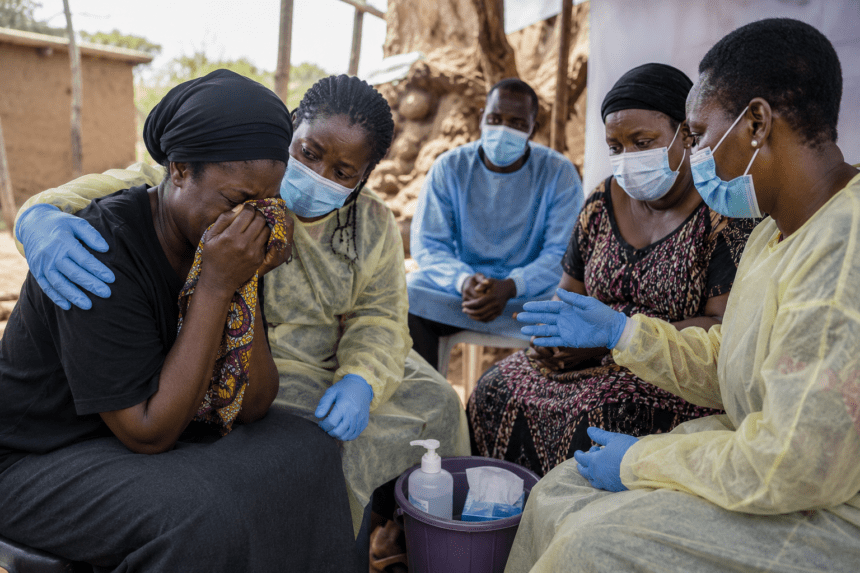
In communities affected by Ebola outbreaks, grief is often compounded by fear, isolation, and strict public health rules that change how families can say goodbye to their loved ones.
One mourner described the painful experience of losing both parents within a single day, a reminder of how quickly the disease can devastate entire families. In many Ebola-affected regions, traditional burial practices are restricted to prevent further transmission of the virus, as contact with infected bodies can spread the disease.
Health workers and aid organizations now guide families through safe and dignified burial practices, allowing mourning while ensuring infection control. Trained teams handle the preparation and burial of bodies using protective equipment, while families are given space to observe rituals from a safe distance.
Experts say these measures, though emotionally difficult, are essential for breaking the chain of infection during outbreaks. At the same time, mental health support and community counseling are being introduced to help survivors cope with trauma and loss.
Public health officials emphasize that balancing safety with cultural sensitivity is crucial, so families can grieve while still protecting their communities from further spread of the virus.