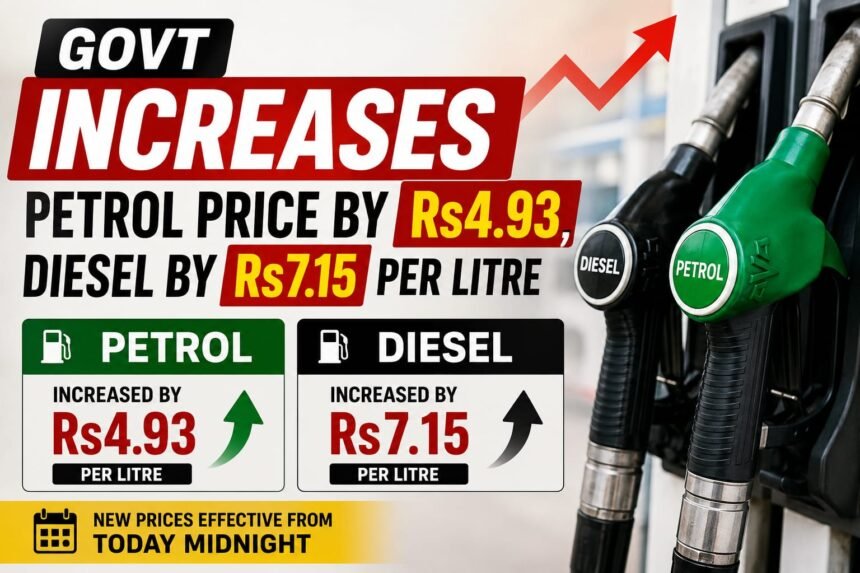
ISLAMABAD: The federal government has announced an increase in the prices of petroleum products, raising the price of petrol by Rs4.93 per litre and high-speed diesel (HSD) by Rs7.15 per litre. The revised prices came into effect from July 22, following a notification issued by the Ministry of Finance.
Under the new pricing structure, the price of petrol has increased from Rs315.80 to Rs320.73 per litre, while high-speed diesel now costs Rs367.21 per litre, up from Rs360.06 per litre.
The government stated that the latest revision was made on the recommendation of the Oil and Gas Regulatory Authority (OGRA) and the relevant ministries after reviewing fluctuations in international petroleum prices and changes in the global oil market. Officials said the adjustment reflects recent increases in international crude oil prices and import costs.
Petrol is the most widely used fuel in Pakistan, particularly by private vehicles, motorcycles, and small transport operators. Any increase in its price directly affects millions of consumers and raises transportation expenses for households and businesses alike.
The increase in the price of high-speed diesel is expected to have a broader impact on the economy. Diesel is the primary fuel used by heavy transport vehicles, buses, agricultural machinery, and goods carriers. Higher diesel prices often lead to increased freight charges, which can result in higher prices of essential commodities, including food items, vegetables, construction materials, and other consumer goods.
Economists believe the latest hike may add to inflationary pressures, as increased fuel costs are usually passed on to consumers through higher transportation and production expenses. The revision comes at a time when many households are already struggling with the rising cost of living.
Business groups and transporters have expressed concern over the increase, saying higher fuel prices will increase operating costs and put additional financial pressure on businesses and commuters. Public transport fares may also be revised upward if transport operators decide to pass on the additional fuel costs to passengers.
The government reviews petroleum prices periodically in line with international market trends, exchange rate movements, and applicable taxes and levies. Officials maintain that the adjustments are necessary to reflect global market conditions while ensuring a stable supply of petroleum products across the country.
The latest increase is expected to remain in force until the next official review of petroleum prices, unless the government announces further revisions in response to changes in international oil markets.