Europe’s landscape is hardening into a tinderbox. A relentless summer of record-breaking heatwaves and uneven rainfall has left vast swathes of the continent—from the Mediterranean basin to the once-verdant forests of the north—vulnerable to catastrophic wildfires.
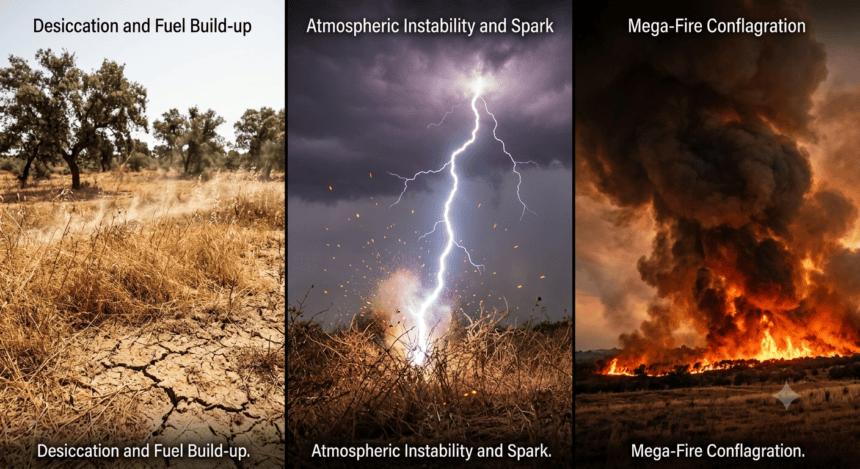
Meteorologists and climate scientists are pointing to a “perfect storm” of conditions. High-pressure systems have trapped stagnant, hot air over the continent for weeks, while previous months of drought depleted soil moisture to levels not seen in decades. Vegetation that should be lush and resilient is now brittle, dry, and primed to ignite.
The consequences are already moving beyond the traditional fire-prone zones. While Greece, Spain, and Italy are fighting recurring blazes, the risk is migrating. Forest managers in Central Europe are reporting unprecedented drying in pine and spruce stands that historically lacked the fuel load to sustain massive fires.
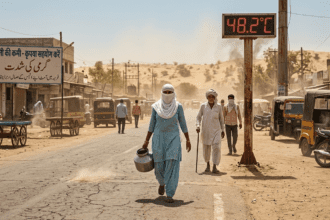
“The season isn’t just longer; it’s deeper,” says a senior analyst at the European Forest Fire Information System (EFFIS). “We are seeing fire behavior that defies historical models. When humidity drops below 20% and temperatures stay north of 40 degrees Celsius, the forest isn’t just burning—it’s erupting.”
The economic impact is mounting. Beyond the immediate destruction of homes and infrastructure, the fires are devastating agricultural yields and destroying carbon sinks that are vital to the continent’s long-term climate goals. In the Mediterranean, the loss of olive groves and vineyards threatens the livelihoods of thousands, many of whom are watching their family legacies turn to ash in a matter of hours.
Policy makers are scrambling to adapt. Traditional firefighting tactics, which rely on localized responses, are struggling against the sheer scale of the blazes. Governments are now looking toward cross-border resource sharing, with the European Union’s civil protection mechanism being tested more frequently than at any point since its inception.
Yet, equipment and manpower are only part of the equation. The underlying issue remains the rapid shift in climate patterns. As the summer progresses, the window for containment is shrinking.
For many residents in the path of these fires, the uncertainty has become the new normal. They aren’t asking if a fire will start, but when—and whether the current emergency infrastructure can hold the line.