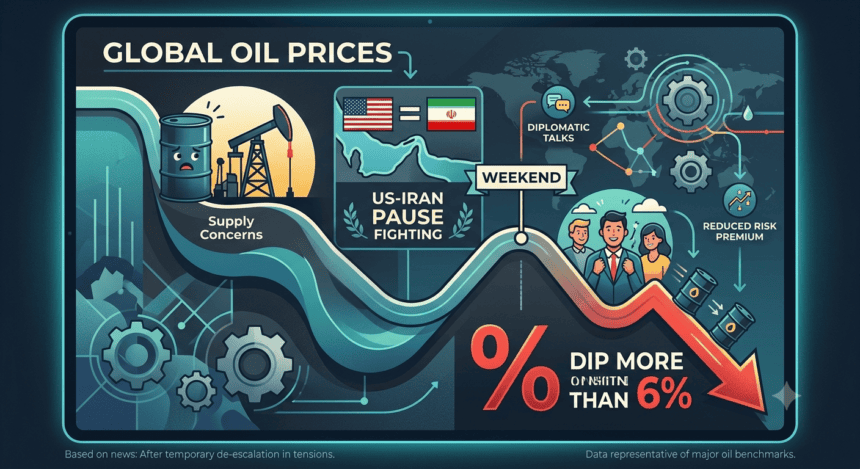
Global oil prices fell by more than 6% after the United States and Iran paused fighting over the weekend, easing fears of an immediate escalation in the conflict and reducing concerns about potential disruptions to crude oil supplies.
The sharp decline came as traders reacted to the temporary halt in hostilities and reassessed the risk of further damage to key energy infrastructure and shipping routes. A reduction in geopolitical tensions generally lowers the risk premium built into oil prices, which had risen amid fears that a wider conflict could affect global energy markets.
Market participants are closely monitoring developments between Washington and Tehran, as any renewed fighting could quickly reverse the decline and push oil prices higher again. The possibility of disruptions to oil production, transportation and exports remains a major concern for traders.
The drop in crude prices could provide some relief to oil-importing countries by reducing import costs and easing pressure on inflation. However, analysts warn that the market remains highly sensitive to further developments in the conflict.
Investors are now watching for signs of whether the pause in fighting could lead to broader diplomatic efforts or whether tensions will escalate again. Any significant change in the situation could have a direct impact on global oil prices and energy markets.