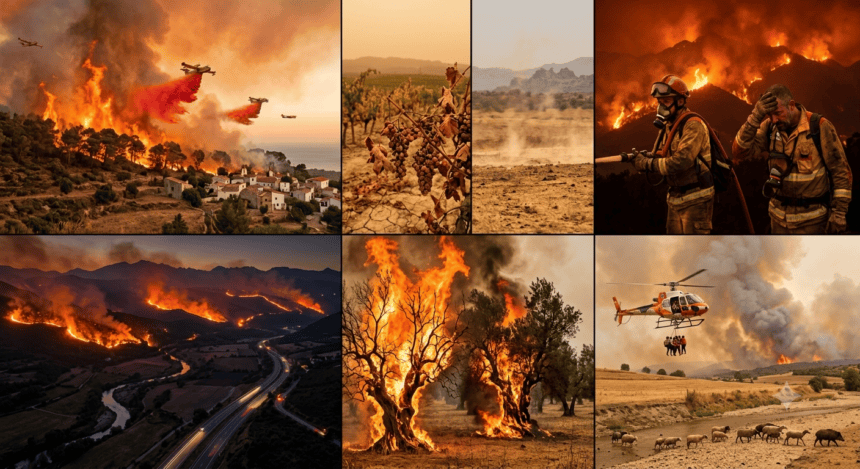
Firefighters across Western Europe are bracing for a fresh surge in wildfire activity as a brutal heat wave grips France and Spain. With temperatures expected to climb past 40°C (104°F) in several regions, emergency services fear the current fire season—already the most destructive in recent memory—will spiral further out of control.
In France, the Gironde region remains the primary point of concern. Thousands of hectares of pine forest have already turned to ash, and the dry, gusty winds forecast for the coming days provide the perfect fuel for new ignitions. Authorities have evacuated over 30,000 residents and tourists since the fires began, a massive logistical undertaking that has strained local resources to their breaking point.
Spain’s situation is equally dire. More than 30 active fires are currently burning across the country, with the Zamora province suffering the most significant damage. The scorched landscape there has claimed the lives of both a firefighter and a livestock farmer in the last 48 hours, highlighting the lethal reality of these conditions.
“The environment is effectively a tinderbox,” said a regional civil protection coordinator in Madrid. “We aren’t just fighting the flames; we’re fighting the climate itself.”
The meteorological offices in both nations have issued red alerts, the highest level of warning. Forecasters point to a stagnant high-pressure system—often called a “heat dome”—that is trapping hot air over the Iberian Peninsula and moving steadily north. This isn’t a temporary spike; it’s a persistent weather pattern that prevents night-time cooling, denying exhausted crews the few hours of relief they usually rely on to contain fire lines.
Beyond the immediate threat to life and property, the economic fallout is mounting. France’s tourism-dependent coastal towns are seeing mass cancellations, while Spanish agricultural sectors face the total loss of seasonal crops. Insurance analysts are already tracking damages in the hundreds of millions of euros, a figure expected to climb as the week progresses.
Governments in Paris and Madrid are now calling for greater inter-European coordination, requesting additional water-bombing aircraft from neighboring EU states. While these reinforcements provide a temporary tactical advantage, they don’t solve the underlying issue: an unseasonably dry spring followed by a summer that refuses to break.
As the mercury rises toward record-setting levels on Wednesday, the focus for thousands of ground crews shifts from containment to survival. With the heat wave showing no signs of relenting, the question isn’t whether more land will burn, but how much.