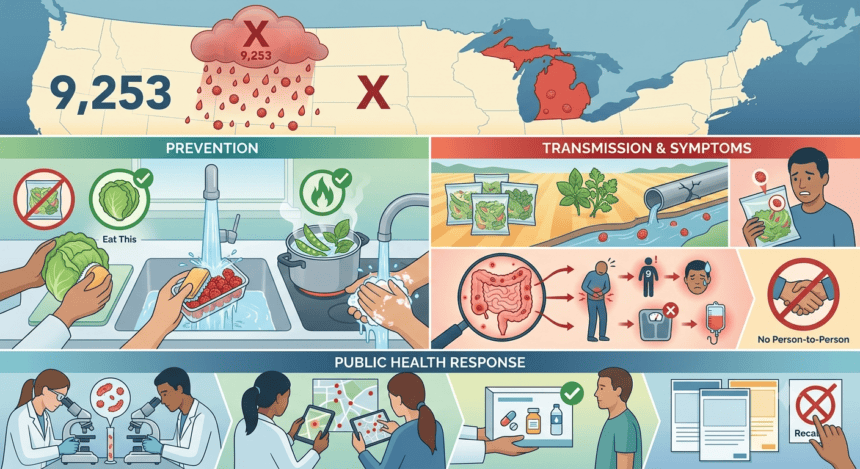
State health officials have confirmed 9,253 cases of cyclosporiasis across Michigan, marking a significant surge in a parasitic infection typically linked to contaminated produce. The Michigan Department of Health and Human Services (MDHHS) is currently investigating the source of the outbreak, as patient counts continue to climb.
Cyclosporiasis—an intestinal illness caused by the microscopic parasite *Cyclospora cayetanensis*—triggers severe diarrhea, stomach cramps, and fatigue. While the current case load is high, the state has not yet pinned the outbreak on a specific food item or retail chain.
“We are looking at everything,” said a department spokesperson during a briefing Wednesday. “The sheer volume of reports makes identifying a single point of origin complex.”
The parasite doesn’t spread from person to person. Instead, it enters the body through the consumption of food or water contaminated with feces. In the United States, outbreaks are almost always traced back to fresh produce—specifically cilantro, basil, lettuce, or raspberries imported from regions where the parasite is endemic.
The current numbers represent a sharp deviation from seasonal norms. Local clinics are reporting a backlog of stool samples, and epidemiologists are working to cross-reference patient meal histories from the past two weeks.
For many, the infection is more than a simple stomach bug. Symptoms often linger for weeks or even months if left untreated. While the illness is rarely fatal, the persistent nature of the parasite often requires a specific course of antibiotics—typically trimethoprim-sulfamethoxazole—to clear the infection from the gut.
The MDHHS is urging residents to wash all fresh produce thoroughly, though they admit this is an imperfect defense. “Washing reduces the risk, but it doesn’t eliminate the threat if the parasite is embedded in the tissue of the produce,” the official noted.
As state labs process the remaining samples, the focus remains on identifying the supply chain link. Until a specific food product is pulled from shelves, the case count is expected to rise.
Residents experiencing prolonged gastrointestinal distress are being advised to skip over-the-counter anti-diarrheal medication and instead provide a stool sample to their primary care physician to rule out the parasite.