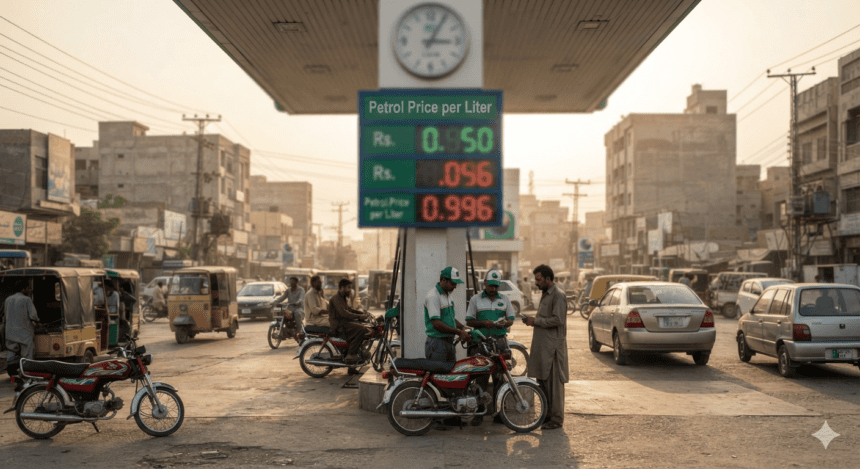
Pakistan’s government has kept petrol prices unchanged for the next fortnight, providing a rare moment of stability for a public weary of frequent fuel hikes. Finance Ministry officials confirmed the decision late Wednesday, opting to maintain current rates despite fluctuations in the global oil market.
The move comes as a tactical pause. With inflation rates still hovering in double digits, any hike would have hit transport costs and food prices immediately. By holding the line, the government is looking to avoid sparking fresh unrest among lower-income households already struggling with high utility bills.
Petrol will continue to retail at the current price point through August 14. High-speed diesel—the lifeblood of the country’s logistics and agricultural sectors—also remains untouched.
The decision hinges on a recent dip in international crude benchmarks. While the global market has seen volatility over the last three weeks, the local currency’s relative stability against the dollar allowed the government to absorb the difference without passing the burden to the pump.
“We’ve managed to keep the prices flat,” a senior official at the Petroleum Division told reporters. “The goal is to maintain economic momentum without dumping more inflationary pressure on the common man.”
Critics remain skeptical. Independent energy analysts point out that the government is still heavily taxing fuel to meet strict revenue targets set by international lenders. While the price at the pump isn’t rising today, the underlying tax structure remains high, leaving little room for a significant price cut even if global oil prices drop further.
For now, the commute to work will cost the same as it did yesterday. Whether that stability lasts beyond mid-August depends entirely on how global supply chains react to the latest tensions in the Middle East. For the average Pakistani, the reprieve is welcome—but the uncertainty remains.