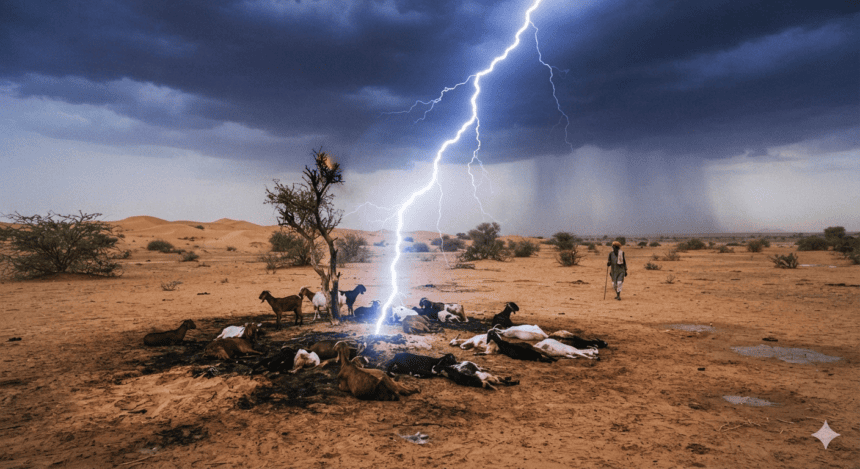
A freak lightning strike claimed the lives of 12 goats in the remote village of Bhalwa, located in Sindh’s Tharparkar district, during a sudden bout of pre-monsoon rainfall on Tuesday afternoon.
The herd was grazing in an open field when the bolt hit. Local shepherds reported that the animals died instantly. No human casualties were recorded, but for the local pastoral community, the loss represents a significant economic blow. In a region where livestock is the primary currency and livelihood, losing a dozen head of cattle in a single flash is more than just bad luck; it’s a financial crisis for the affected families.
“The sky turned black in minutes,” said Rahim, a local resident who witnessed the aftermath. “We heard a deafening crack, and then silence. When we reached the field, the goats were already gone.”
Tharparkar is no stranger to volatile weather, yet the intensity of these localized electrical storms has caught many off guard. While the district administration often issues warnings for heatwaves, the infrastructure to predict or protect against localized lightning strikes in open desert grazing lands remains non-existent.
Veterinary officials from the local livestock department reached the site several hours later to document the loss. They confirmed that the animals had been struck directly, leaving no chance for survival.
For the people of Bhalwa, the tragedy highlights the vulnerability of their traditional lifestyle. As climate patterns shift across southern Sindh, these sudden, violent weather events are becoming a recurring threat to the very animals that sustain the desert economy.
The owners now face the grim reality of rebuilding their herds without any formal government compensation mechanism for weather-related livestock deaths.