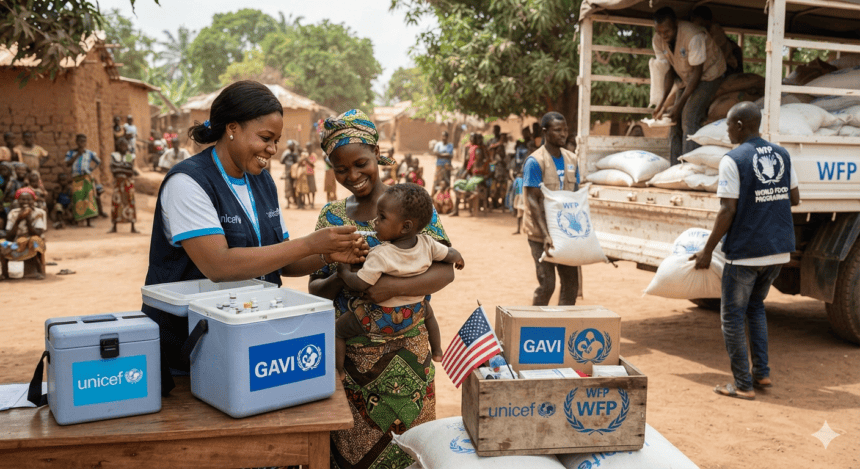
The United States has quietly resumed funding for UNICEF, Gavi, and the World Food Programme, reversing a temporary freeze that had paralyzed critical health and nutrition initiatives across several developing nations.
The reversal follows intense pressure from international aid organizations and public health advocates who warned that the funding gap threatened to derail routine vaccination campaigns and emergency food distribution. State Department officials confirmed the shift late Wednesday, though they declined to provide a detailed breakdown of the specific amounts released or the exact rationale for the initial suspension.
The funding freeze had left agencies scrambling to bridge budget shortfalls. UNICEF and Gavi—the Vaccine Alliance—rely heavily on U.S. contributions to procure vaccines for polio, measles, and other preventable diseases in high-risk regions. When the money stopped, supply chains stuttered. In parts of sub-Saharan Africa and Southeast Asia, local health workers were forced to postpone immunization drives, leaving millions of children vulnerable to outbreaks that were already showing signs of resurgence.
Beyond vaccines, the World Food Programme faced a different set of challenges. With global food prices remaining volatile and conflict-driven displacement hitting record highs, the agency relies on U.S. capital to move grain and nutritional supplements to famine-stricken areas. A pause in support meant fewer trucks on the road and empty distribution centers in regions where, for many, the agency’s ration is the only meal of the day.
The Biden administration’s decision to restart the flow of cash suggests a strategic retreat from a policy that had become an unexpected diplomatic liability. Critics of the freeze had argued that cutting ties with these agencies undermined American soft power and created a vacuum that other global actors were all too eager to fill.
Yet, the episode has left a lingering sense of unease among global health partners. While the aid is back, the fragility of the funding pipeline remains a point of contention. Aid organizations, now accustomed to the volatility of Washington’s budget cycles, are reassessing their reliance on a single donor.
For the millions of people in the field, the policy reversal is less a matter of high-level diplomacy and more a matter of survival. As the agencies ramp up operations to clear the backlog created by the weeks-long suspension, the focus shifts back to the logistics of delivery—ensuring that the restored funding actually reaches the clinics and distribution points before the next crisis hits.