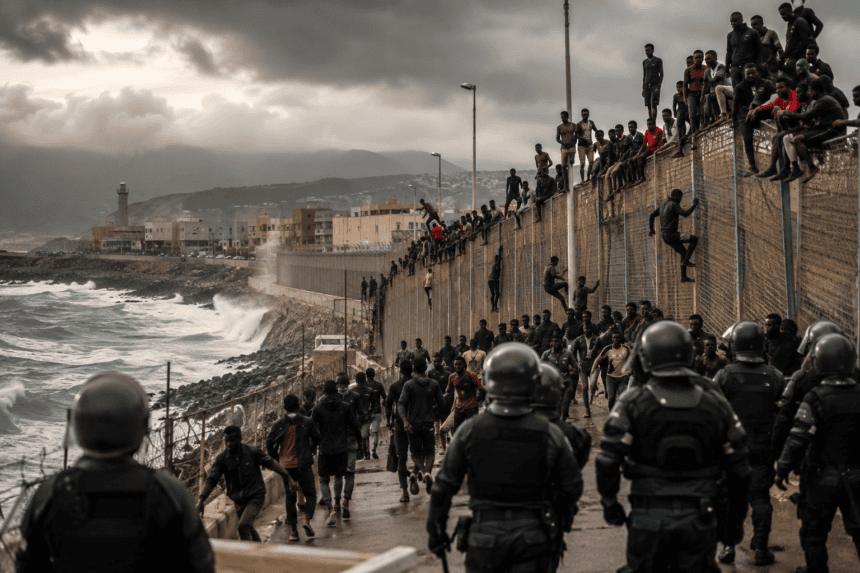
CEUTA — The double-fenced perimeter separating this Spanish enclave from Morocco has become a pressure cooker. Thousands of migrants are testing the physical limits of the border barriers, while local authorities in Madrid and Rabat struggle to manage the surge.
The latest attempt to breach the border saw hundreds sprinting toward the six-meter-high wire meshes that define the edge of European territory. Spanish Civil Guard units, overwhelmed by the sheer volume of arrivals, resorted to crowd-control measures that have drawn sharp condemnation from human rights observers.
For the residents of Ceuta, the border isn’t just a political talking point. It’s a daily reality. The local economy is reeling, schools are struggling to absorb new arrivals, and the sense of security that once defined this coastal city is fraying under the weight of a geopolitical standoff.
“We are stretched beyond capacity,” a senior police official stationed at the Tarajal border crossing told reporters Tuesday. He spoke on condition of anonymity, citing strict government protocols. “We can hold the line for a day, maybe a week. But we aren’t built for a permanent state of siege.”
The tension is fueled by a volatile mix of economic desperation in North Africa and a lack of clear diplomatic consensus between Spain and Morocco. Morocco frequently uses migration as a lever in its broader negotiations with Madrid, effectively turning the border into a bargaining chip in high-stakes regional politics.
Human rights groups point to the “hot returns”—the practice of immediate deportation without legal processing—as a violation of international asylum laws. Yet, the Spanish government maintains that the physical integrity of its borders remains the absolute priority.
The numbers tell a grueling story. Hundreds have been intercepted in the last 48 hours alone, many suffering from dehydration or injuries sustained while scaling the razor-wire-topped fences. Local hospitals are operating at double their intended capacity, with medical staff reporting a critical shortage of basic supplies.
As the sun sets over the Mediterranean, the silence at the border remains deceptive. The next surge isn’t a matter of if, but when. For the families waiting on the Moroccan side and the officials patrolling the Spanish side, the status quo is no longer sustainable.
Until Brussels and Rabat reach a durable agreement on border management, the people of Ceuta will continue to live in the shadow of a fence that separates two worlds—and solves nothing.