KARACHI: Sindh Chief Minister Murad Ali Shah has rejected claims that Pakistan’s governance system has collapsed, saying the debate over creating new provinces must remain within constitutional and legal boundaries and should not lead to violence.
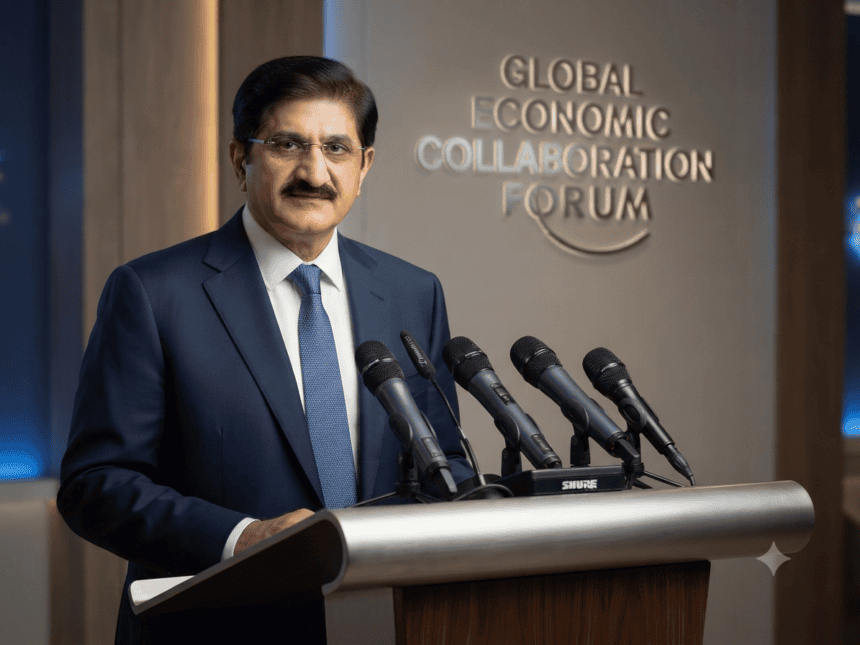
Speaking to reporters after addressing the Mining Technical Conference 2026, Shah said there was no need for political dramatization over the issue, stressing that the Constitution provides a procedure for any change involving provincial boundaries.
He said the Sindh Assembly had repeatedly and unanimously opposed the creation of another province in Sindh. However, the chief minister maintained that discussing the proposal should not be considered taboo and said any future change could be debated through the proper constitutional process.
Shah also described protests as a democratic right but urged political groups to follow established procedures and obtain the necessary permission from the administration before holding demonstrations.
On the provincial government’s wheat policy, the chief minister said Sindh had allocated resources to procure one million tonnes of wheat, primarily to safeguard the interests of local farmers.
Defending the performance of his government, Shah referred to developments in Tharparkar and invited critics of the existing system to visit the district and assess its progress.
During the mining conference, the chief minister said electricity generation from Thar coal was expected to rise from the current 2,640 megawatts to 3,000 megawatts. He added that more than 15 million tonnes of coal were being extracted annually from Thar blocks and claimed that the use of domestic coal was saving the country more than $1.5 billion in foreign exchange each year.
Shah reiterated the Sindh government’s commitment to making greater use of the province’s mining resources and expanding the sector’s contribution to the economy.
The debate over administrative restructuring has gained momentum in recent weeks. On July 31, Inter-Services Public Relations Director General Lt Gen Ahmed Sharif Chaudhry said an administrative reset could be considered if necessary for better governance, but stressed that any such move must be carried out through constitutional and legal procedures and with the consent of the people.
Meanwhile, Muttahida Qaumi Movement-Pakistan leader Mustafa Kamal announced on July 25 that his party would begin street demonstrations over what it described as systematic injustice against Karachi and other urban areas of Sindh. The party has also renewed its demand for new provinces and greater devolution of powers.
Jamiat Ulema-e-Islam-Fazl chief Maulana Fazlur Rehman has also warned against creating new provinces without public approval. Speaking in Quetta, he criticised the government’s handling of political and administrative challenges and called for governance based strictly on the Constitution.
The proposed creation of new provinces has also triggered a legal debate among constitutional experts and politicians. Former additional attorney general Waqar Rana has argued that the Constitution does not contain an explicit provision allowing the creation of new provinces. He said Article 239 deals with changes to provincial boundaries but does not, in his view, directly provide for the creation of new provinces.
Rana suggested that an express constitutional provision should first be introduced before any new provinces are created. He said such a constitutional amendment would require approval through the relevant parliamentary and provincial procedures.
Pakistan Bar Council member Barrister Salahuddin Ahmed, meanwhile, said creating a new province would necessarily involve changing the boundaries of an existing province. He argued that the process would therefore require a two-thirds majority in the relevant provincial assembly as well as two-thirds majorities in both houses of Parliament.
Ahmed also noted that proponents of the proposal could seek changes to the constitutional procedure itself. He further referred to Article 239(5), which places constitutional amendments beyond the jurisdiction of courts to challenge on constitutional grounds.
The debate therefore remains both politically sensitive and legally complex, with supporters calling for greater administrative devolution and opponents insisting that any restructuring must reflect constitutional requirements and public consent.