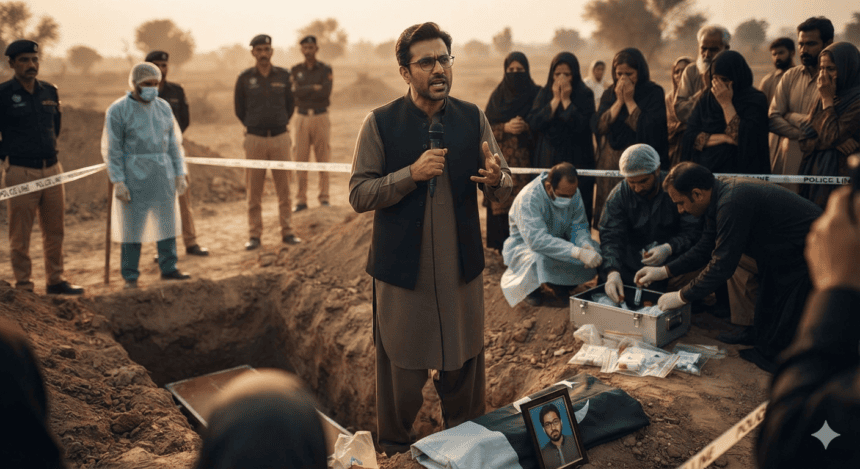
KARACHI — Forensic teams exhumed the body of Mir Raza on Tuesday, collecting samples to determine the cause of death in a case that has sparked a fierce legal and public battle.
The process, overseen by a judicial magistrate, took place weeks after initial investigations failed to satisfy the family’s suspicions of foul play. Human rights lawyer Jibran Nasir, representing the aggrieved family, stood outside the graveyard as the procedure concluded. He wasted no time in calling out the systemic delays that defined the case.
“We aren’t just looking for a cause of death anymore; we are looking for accountability for the negligence that nearly buried the truth,” Nasir told reporters shortly after the team finished their work.
He pointed to the initial investigation as a “textbook example of how evidence is compromised.” The family has long alleged that local authorities ignored critical leads, forcing them to push for exhumation to secure forensic evidence that should have been collected immediately after the death.
The samples are now headed to a specialized laboratory. For the family, the wait for these results is the final hurdle in a grueling campaign to challenge the official narrative. They have maintained from day one that the circumstances of Raza’s passing don’t align with the police’s early findings.
Nasir warned that the defense will be watching the chain of custody closely. Any lapse in the handling of these samples could render the entire effort moot, leaving the family without the closure they’ve sought for weeks.
The court has directed the medical board to submit its report within ten days. Whether these findings provide a definitive answer or lead to further legal gridlock remains the primary concern for the family, who have vowed to take the fight to the provincial high court if the forensic results prove inconclusive.
For now, the focus shifts to the lab. The results will either validate the family’s persistent claims or force them to confront a reality they are not yet prepared to accept.