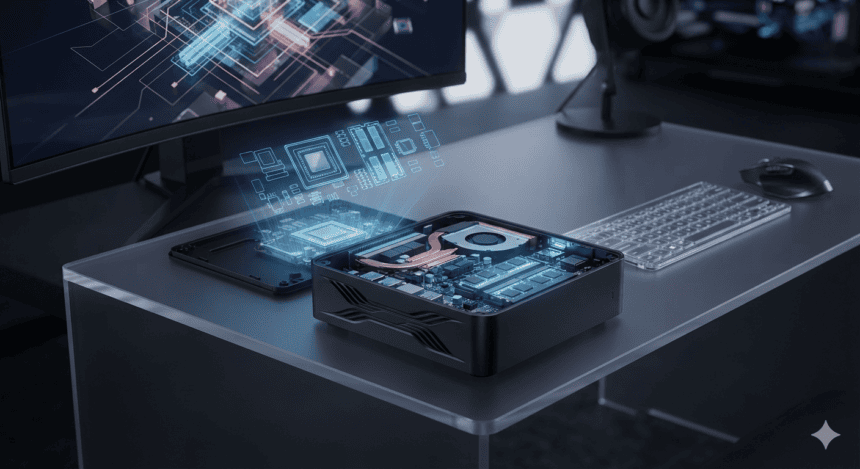
Lenovo is refreshing its compact desktop lineup with a new ThinkCentre iteration, centering the hardware on Intel’s upcoming “Wildcat Lake” architecture. The device aims to bridge the gap between space-saving office hardware and high-performance computing, packing 32GB of DDR5 memory into a chassis that fits in the palm of a hand.
Industry leaks confirm the machine will leverage Intel’s next-generation platform, signaling a shift toward higher efficiency for enterprise-grade mini PCs. While Lenovo has maintained silence on the exact release date, the inclusion of DDR5 RAM suggests a focus on memory-intensive workflows like data analysis and multitasking, rather than just basic web browsing.
The shift to Wildcat Lake is the real story here. By moving to this architecture, Lenovo is betting that businesses are ready to trade legacy hardware for silicon that can handle AI-assisted workloads locally. It’s an aggressive move for the ThinkCentre brand, which historically prioritized stability over cutting-edge performance.
For IT managers, the appeal is clear: you get the footprint of a legacy thin client with the raw power of a mid-range workstation. The 32GB of RAM is a significant upgrade from the 8GB or 16GB standards currently dominating the mini PC market. It effectively removes the memory bottleneck that usually kills performance in these small form-factor machines.
Despite the technical leap, the challenge remains thermal management. Cramming high-performance silicon into a tight space often leads to thermal throttling. Lenovo hasn’t detailed its cooling solution yet, but given the ThinkCentre’s track record, they’ll likely rely on an active fan system that prioritizes noise reduction in quiet office environments.
Pricing and regional availability remain under wraps. However, industry insiders expect a rollout in the enterprise channel first, with a broader commercial launch likely following by the end of Q3.
This isn’t just another spec bump. It’s Lenovo positioning its smallest desktop as a serious tool for the modern, cramped office space. Whether the market is willing to pay the premium for that kind of density in a mini PC is the question that will define the product’s success.