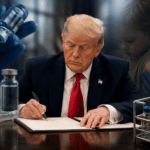
Benjamin Netanyahu faces a political squeeze as he weighs a proposed Gaza disarmament framework championed by Donald Trump. The Israeli prime minister is caught between his right-wing coalition’s demand for total military control and the pressure to align with a potential incoming U.S. administration’s desire for a swift regional pivot.
The proposal, which hinges on the complete demilitarization of the Gaza Strip in exchange for a massive reconstruction package, offers Netanyahu a way out of the current quagmire. Yet, the price is high. Forging a deal that satisfies Trump—who has signaled he wants “the fighting finished”—risks alienating the ultranationalist ministers in Netanyahu’s cabinet. These ministers have consistently threatened to collapse the government if the military campaign against Hamas concludes without the total destruction of the group’s leadership.
“The prime minister is playing a game of inches,” said a veteran analyst close to the Knesset. “He needs to show Washington he’s a partner for a post-war order, but he can’t afford to lose the coalition partners who keep his chair in the prime minister’s office from being pulled out from under him.”
The friction lies in the definition of “disarmament.” Netanyahu’s security establishment prefers a long-term, open-ended Israeli presence in the Philadelphi Corridor and central Gaza to ensure no re-militarization occurs. Trump, conversely, has leaned into a transactional approach that favors rapid regional stabilization. By pushing for a deal now, the former president is effectively forcing Netanyahu to choose between his long-term security doctrine and his immediate political survival.
Inside the cabinet, the divide is stark. Finance Minister Bezalel Smotrich and National Security Minister Itamar Ben-Gvir have rejected any framework that implies a return to pre-war governance structures or international oversight that might restrain the Israel Defense Forces. They view the Trump-aligned proposal as a “soft exit” that leaves Hamas’s ideology intact.
Netanyahu has opted for his usual strategy: stalling. He has publicly praised the prospect of working with the incoming U.S. administration while privately emphasizing to his ministers that no final commitments have been made. He is banking on the hope that the transition period in Washington will provide enough cover to extend the current military operations without triggering a full-blown diplomatic confrontation.
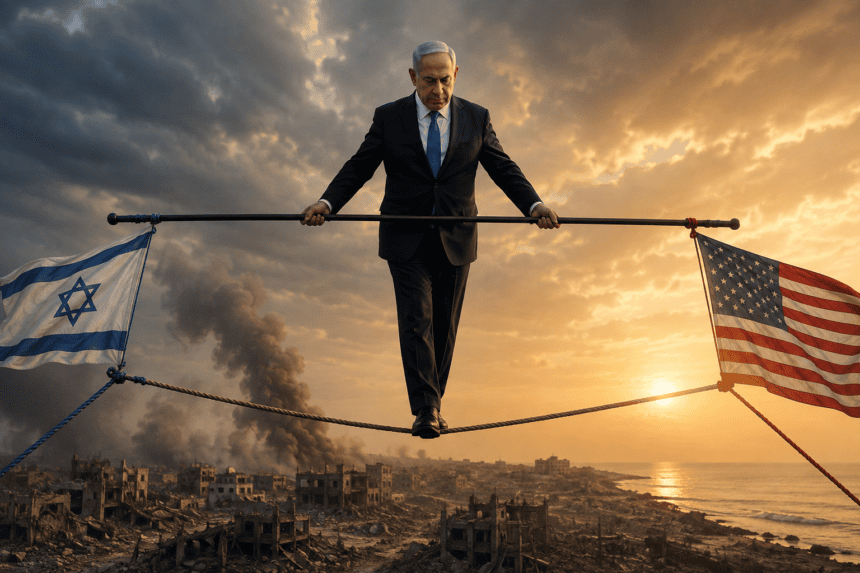
However, the clock is ticking. With U.S. leverage over military aid and diplomatic cover at the UN hanging in the balance, Netanyahu’s ability to “walk the tightrope” is nearing its limit. If he rejects the framework, he risks a cold shoulder from a potentially returning Trump. If he accepts it, he risks his government.
For now, the Israeli public remains divided, with the families of hostages pressing for any deal that secures their return, and the security hawks demanding the completion of the war’s original objectives. Netanyahu’s next move won’t just define the future of Gaza; it will determine whether his government survives the winter.