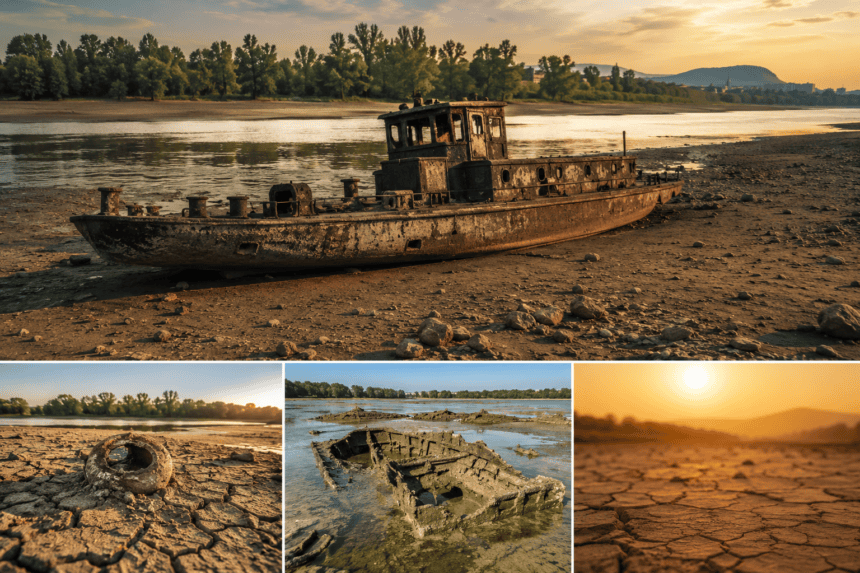
The Danube is at its lowest level in nearly a century. As the river recedes, it has pulled back the veil on a graveyard of history: dozens of Nazi-era warships, scuttled during the final months of World War II, now sit exposed near Prahovo, Serbia.
These aren’t just relics. They are active hazards.
When the German Black Sea fleet retreated from Soviet forces in 1944, they sank their own vessels to avoid capture. Now, nearly 80 years later, the hulks are clogging one of Europe’s most vital waterways. The exposed steel hulls have narrowed the navigable channel, forcing commercial barges to navigate a treacherous, shifting gauntlet of jagged metal and unexploded ordnance.
For local captains, the situation is a daily gamble. “We are sailing through a minefield of history,” one river pilot noted. “One wrong turn and you hit a shell that hasn’t seen the light of day since the war.”
The Serbian government has finally begun a long-delayed operation to remove the ships, but it’s a race against time and geography. Salvage crews aren’t just dealing with rusted metal. Many of these vessels remain heavily armed, packed with tons of ammunition and explosives that have become increasingly unstable after decades submerged in silt.
The European drought, which has pushed water levels to record lows across the continent, turned what was once a deep-water archeological puzzle into an urgent infrastructure crisis. The Danube is a primary artery for trade, moving grain, oil, and iron ore from the Black Sea deep into the heart of Europe. Every day the river remains obstructed, the economic cost climbs as ships are forced to wait for passage or navigate at significantly reduced loads.
Climate scientists point to these shipwrecks as a grim marker of a changing environment. While historians see the vessels as a window into the desperation of the Wehrmacht’s retreat, the reality for the shipping industry is far more pragmatic. The river is shrinking, the climate is warming, and the ghosts of the Second World War are no longer buried safely beneath the mud.
As salvage teams prepare to neutralize the explosives, the Danube remains a volatile reminder that the past is never truly gone—it’s just waiting for the water to drop.