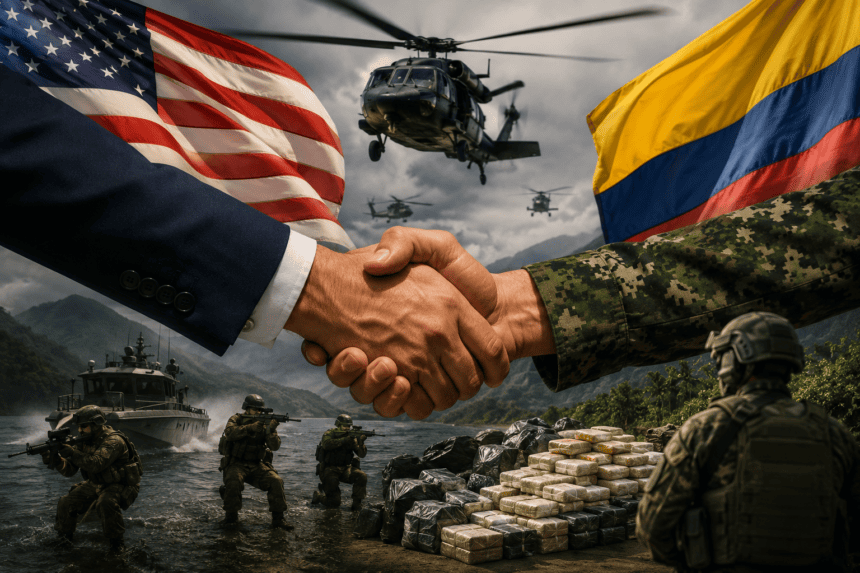
WASHINGTON — The Trump administration is fast-tracking a new military cooperation agreement with Colombia, aiming to dismantle entrenched drug trafficking networks that have defied years of previous interdiction efforts. The move signals a shift toward a more aggressive, direct-action posture in the Andean region.
Defense officials in Washington and Bogotá finalized the details behind closed doors this week. The plan centers on increased intelligence sharing and the deployment of specialized U.S. advisory teams tasked with training local units in high-stakes capture operations. The goal is to move beyond mere surveillance and toward the active disruption of supply chains feeding the U.S. market.
For the White House, the urgency is driven by rising domestic overdose rates and a perceived lack of progress under current regional strategies. By tightening the military bond with Colombia, the administration intends to force a tactical change that puts cartel leadership in the crosshairs, rather than just intercepting shipments at sea.
“We aren’t looking for a slow-burn approach anymore,” a senior Pentagon official said. “The operational tempo is changing because the threat has evolved. We’re providing the tools to take the fight to the architects of these networks.”
The strategy carries significant risk. Critics in both countries argue that an increased military footprint could inflame local tensions and drag U.S. personnel into volatile internal conflicts that have plagued the region for decades. Colombia’s political landscape remains fragile, and there is lingering skepticism about whether a militarized approach can solve what many experts describe as a deep-seated socio-economic crisis.
The partnership also marks a departure from reliance on conventional interdiction. Instead, the focus pivots to “decapitation” strikes—targeting the logistical hubs and financial nodes that keep the cartels running. This involves real-time satellite data and signals intelligence that Colombia’s military previously lacked the capacity to process.
Despite the political friction, the deal is set to move forward immediately. The first wave of advisors is expected to arrive in Bogotá by the end of the month. Whether this shift in strategy will stem the flow of narcotics or simply escalate violence in the region remains the central question for policymakers on both sides of the border.