Donald Trump has labeled growing calls for federal regulation of artificial intelligence a “sick conspiracy,” pushing back against the bipartisan momentum building in Washington to rein in the technology.
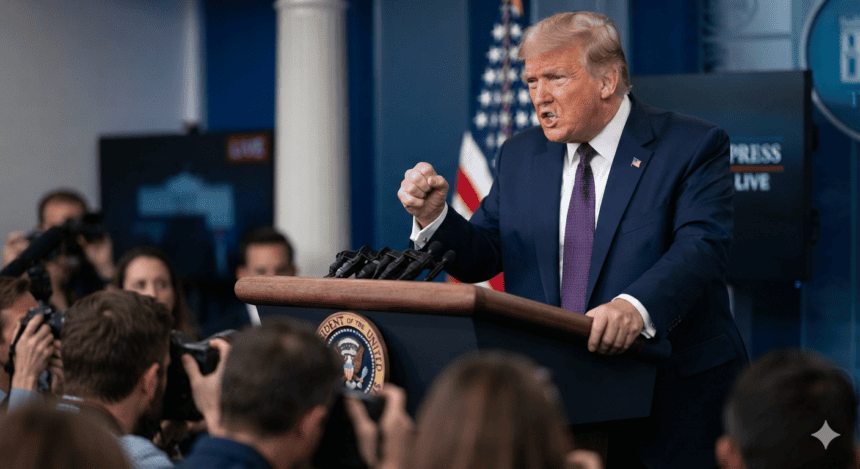
The former president, speaking during a recent podcast interview, dismissed the push for safety guardrails as an attempt by entrenched interests to stifle innovation. He characterized the regulatory movement not as a public safety necessity, but as a calculated effort to control the direction of a sector he views as the next major economic frontier.
“It’s a sick conspiracy,” Trump said. “They want to control it, and they want to make sure that only their people have it.”
His comments hit the industry at a volatile moment. Tech giants like OpenAI, Google, and Microsoft have been navigating a complex landscape of lobbying. While some industry leaders have publicly asked for government oversight to prevent existential risks, critics argue those same companies are using the regulatory process to “capture” the market, effectively pulling up the ladder behind them to prevent smaller startups from competing.
Trump’s stance aligns with a growing libertarian wing of the Republican party that views the AI safety movement with deep suspicion. For these skeptics, the concern isn’t the technology itself, but the possibility that federal agencies—or a small group of Silicon Valley elites—will use “safety” as a pretext to censor political speech or manipulate election-related data.
The Biden administration, meanwhile, has taken a different route. Last year, the White House issued a wide-ranging executive order aimed at setting standards for AI security, privacy, and civil rights. The order forces companies to share safety test results with the government before releasing new models to the public.
Trump’s rejection of this framework suggests a potential pivot for the 2024 campaign. If he returns to the White House, the current regulatory momentum could face a sudden, sharp reversal. His rhetoric signals that he would likely view any attempt to slow down AI development as an attack on American dominance in a global race, particularly against China.
For the developers currently building these models, the political uncertainty is becoming a factor in their long-term strategy. They are now balancing the pressure to appease regulators in Washington against the fear of being left behind by a future administration that might strip away every oversight mechanism currently in place.
Whether the “conspiracy” argument gains traction with voters or remains a niche talking point, it adds a new layer of friction to the debate. The question is no longer just about how to keep AI safe; it’s about who gets to decide what “safe” actually means.