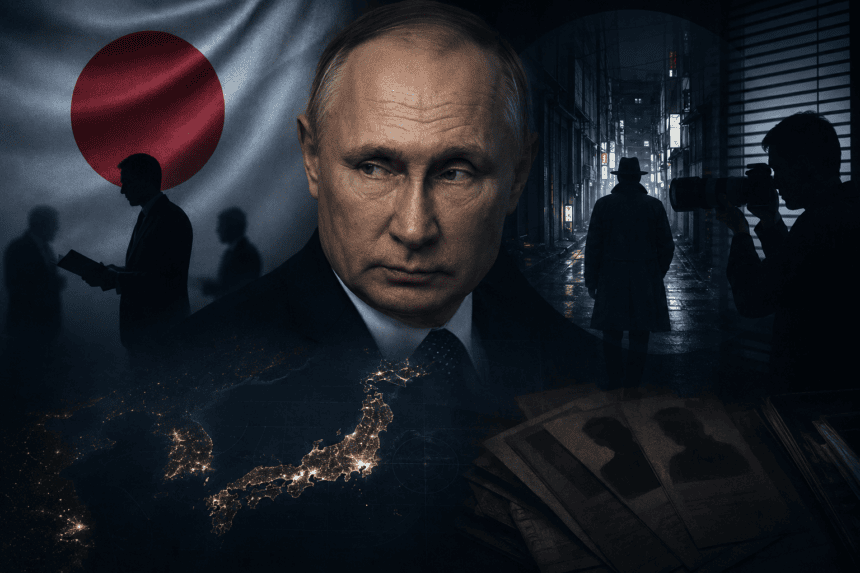
Japan is no longer just a diplomatic bystander in the shadow of the Kremlin. It has become a frontline of intelligence warfare. Since the invasion of Ukraine, the country has shifted from a quiet monitoring post to a high-stakes arena for Russian intelligence operations, forcing Tokyo to dismantle decades of policy that kept its counter-intelligence apparatus in the dark.
The numbers tell a stark story. Before 2022, Japan’s Public Security Intelligence Agency (PSIA) operated with a relatively light touch. Today, the agency is scrambling to contain a surge in clandestine activity. Russian operatives, once comfortable moving through the business and academic corridors of Tokyo and Osaka, are now under unprecedented scrutiny.
“They aren’t just looking for technology anymore,” says a former intelligence analyst familiar with East Asian security. “They are mapping the psyche of the Japanese government, looking for cracks in Tokyo’s alignment with the G7.”
The shift is personal for Japanese officials. Moscow’s decision to label Japan an “unfriendly country”—a direct retaliation for Tokyo’s sanctions—effectively ended the era of “trust-based” diplomacy. In response, Tokyo expelled eight Russian diplomats and trade officials in 2022, a rare and aggressive move for a nation that traditionally prefers back-channel de-escalation.
But expulsions are only the tip of the iceberg. The real battle is happening in the digital and corporate sectors. Russian intelligence officers have pivoted to recruiting Japanese nationals through LinkedIn and other professional networks, targeting mid-level engineers and researchers with access to dual-use technology. The goal is simple: bypass Western export controls by funneling components through third-party intermediaries.
The Japanese government is finally shedding its reluctance to beef up its internal security. Prime Minister Fumio Kishida’s administration is pushing for a “security clearance” system—a concept that has faced fierce resistance in Japan for years due to privacy concerns. The new legislation, currently working its way through the Diet, aims to vet those handling sensitive information, a move that would have been unthinkable a decade ago.
Critics argue this is too little, too late. Japan’s legal framework for punishing espionage remains notoriously weak compared to its Western counterparts. While the U.S. or the U.K. can prosecute spies under robust national security laws, Japan’s legal system often struggles to secure convictions for anything beyond basic document theft.
The Kremlin knows this. By operating in the legal grey zones of Japanese law, Russian agents have turned Tokyo into an open-source intelligence laboratory. They aren’t just stealing secrets; they are exploiting the very transparency that defines Japanese society.
For now, the cat-and-mouse game continues in the cafes of Minato and the quiet research labs of Tsukuba. Tokyo is realizing that neutrality is a luxury it can no longer afford. As the intelligence landscape hardens, Japan is finding that defending its borders requires more than just ships and radar—it requires fighting a war in the shadows that it spent years pretending didn’t exist.