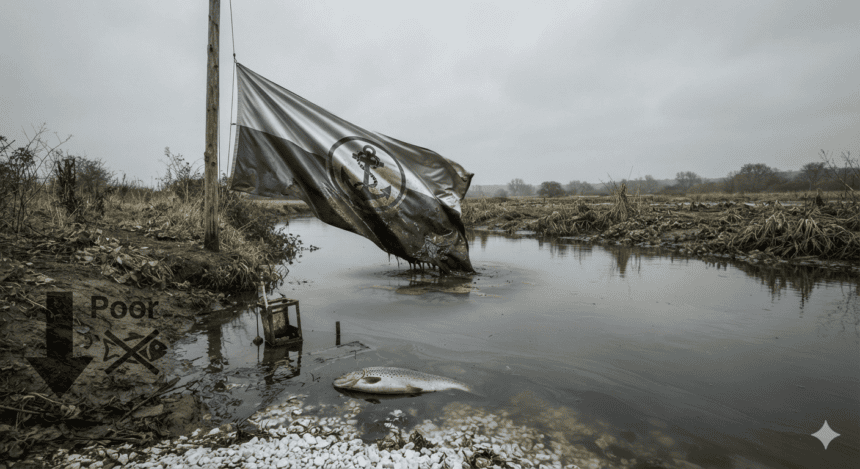
Thames Water’s star environmental project—the Chess River restoration—has been downgraded to “poor” status by the Environment Agency. The classification marks a sharp decline for a waterway once touted by the utility company as a model for ecological recovery.
The Chess, a rare chalk stream in Buckinghamshire, was supposed to be the jewel in Thames Water’s restoration crown. Instead, recent testing shows the water quality failing to meet basic standards, casting doubt on the company’s ability to manage its environmental commitments while it faces a deepening financial crisis.
The downgrade stems from high levels of phosphorus and persistent sewage discharges. For years, campaigners have flagged that despite “flagship” branding, the river remained a dumping ground for untreated effluent during heavy rainfall. The Environment Agency’s latest assessment confirms those concerns: the river’s ecosystem is struggling to survive under the current biological load.
For local residents and angling groups, the designation is a bitter validation of long-standing complaints. They’ve watched for years as the riverbed became choked with algae and the once-clear water turned murky. Thames Water’s marketing campaigns frequently featured the Chess as a success story, yet the reality on the ground—backed by the agency’s data—tells a different tale.
The company is currently under intense scrutiny. With the utility firm teetering on the edge of nationalization or a massive taxpayer-funded bailout, its environmental record is no longer just a regulatory headache; it’s a political liability. Critics argue that the “flagship” status was a calculated effort to distract from systemic infrastructure failures.
When asked about the decline, Thames Water pointed to the complexities of urban drainage and the historic nature of their pipe network. They maintain that long-term investment plans will eventually reverse the damage.
That argument is wearing thin with regulators. The Environment Agency is now expected to increase pressure on the utility to explain why a project that received significant resources failed to protect one of England’s most sensitive habitats.
The Chess is now a symbol of a broader breakdown—a company struggling to keep its infrastructure upright, let alone restore the natural world it promised to protect. The “poor” rating isn’t just a mark on a spreadsheet; it’s a warning that the damage to the chalk stream ecosystem may soon reach a point of no return.