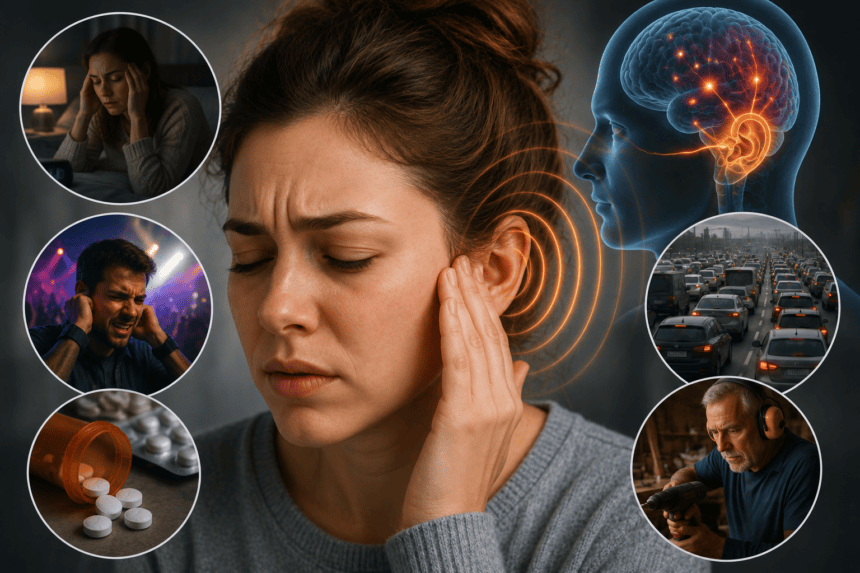
Hearing a ringing, buzzing, humming, hissing or clicking sound when there is no external source can be an unusual and sometimes worrying experience. This phenomenon is commonly known as tinnitus.
Tinnitus can occur in one ear, both ears or sometimes seem to come from inside the head. For some people, the sound is barely noticeable, while for others it can become persistent and interfere with sleep, concentration and everyday activities.
One reason tinnitus becomes particularly noticeable in silence is the absence of competing sounds. During the day, conversations, traffic, television and other background noises can mask internally perceived sounds. At night, when the environment becomes quiet, the ringing may suddenly seem much louder.
Exposure to loud noise is one of the well-known factors associated with temporary ringing. People may notice tinnitus after attending a loud concert, working around heavy machinery or listening to music through headphones at high volume.
Repeated exposure to excessive noise can potentially damage sensitive structures involved in hearing. This makes hearing protection and sensible headphone volume important for people who regularly encounter loud sounds.
Tinnitus can also have other causes. Earwax buildup, age-related hearing changes, certain medications and conditions affecting the ear may contribute to ringing or other unusual sounds.
Stress and tiredness can also make existing tinnitus more noticeable. When people are anxious or exhausted, they may pay more attention to internal sensations and sounds.
Occasional ringing that disappears quickly is generally less concerning. However, persistent tinnitus deserves professional assessment, particularly if it is becoming more frequent or interfering with sleep and concentration.
People experiencing tinnitus together with sudden hearing loss, severe dizziness, significant ear pain or other unusual symptoms should seek medical attention.
A healthcare professional can examine the ears and assess hearing to determine possible causes. In some cases, treating an underlying problem such as excessive earwax may help.
Protecting hearing is also important. Keeping headphone volume at a reasonable level and using hearing protection around loud machinery can help reduce exposure to potentially damaging noise.