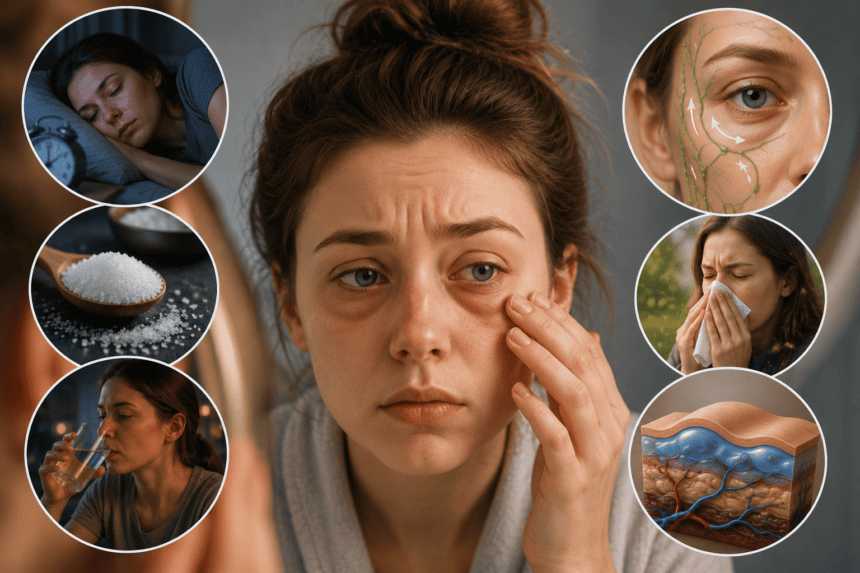
Waking up with puffy eyes is a common experience that affects people of all ages. While many people immediately associate swollen eyes with a lack of sleep, several other factors can contribute to the appearance of puffiness in the morning. Temporary fluid retention, eating salty foods, allergies, dehydration, crying and sleeping position can all play a role.
The skin around the eyes is particularly thin and delicate, which makes even small amounts of fluid accumulation noticeable. During sleep, the body remains in a horizontal position for several hours. This can allow fluid to collect in tissues around the eyes, making the area appear swollen when a person first wakes up.
In many cases, the puffiness gradually decreases after getting out of bed and becoming active. Normal movement and circulation help redistribute the fluid, and the swelling may become much less noticeable as the day progresses.
Sleep is another important factor. People who do not get enough quality sleep may notice more prominent puffiness, dark circles and tired-looking eyes. Irregular sleep schedules can also contribute to an overall tired appearance.
Diet may play a role as well. Foods containing high amounts of sodium can encourage the body to retain water. Eating a particularly salty meal late at night may therefore make morning swelling more noticeable. Staying adequately hydrated and maintaining a balanced diet can help support normal fluid balance.
Allergies can also cause swelling around the eyes. People with allergies may experience itching, redness, watering or irritation in addition to puffiness. Rubbing the eyes can worsen inflammation and make the swelling more prominent.
Although occasional morning puffiness is usually harmless, persistent swelling should not always be ignored. If the swelling remains throughout the day, becomes painful, affects vision or occurs with swelling in other parts of the face or body, medical evaluation may be necessary.
Underlying allergies, infections and certain medical conditions can sometimes cause persistent swelling. A healthcare professional can evaluate the symptoms and determine whether further tests or treatment are needed.
Simple measures such as getting sufficient sleep, reducing excessive salt intake, staying hydrated and avoiding eye rubbing may help reduce ordinary morning puffiness. However, persistent or unusual symptoms should be assessed rather than treated only as a cosmetic concern.