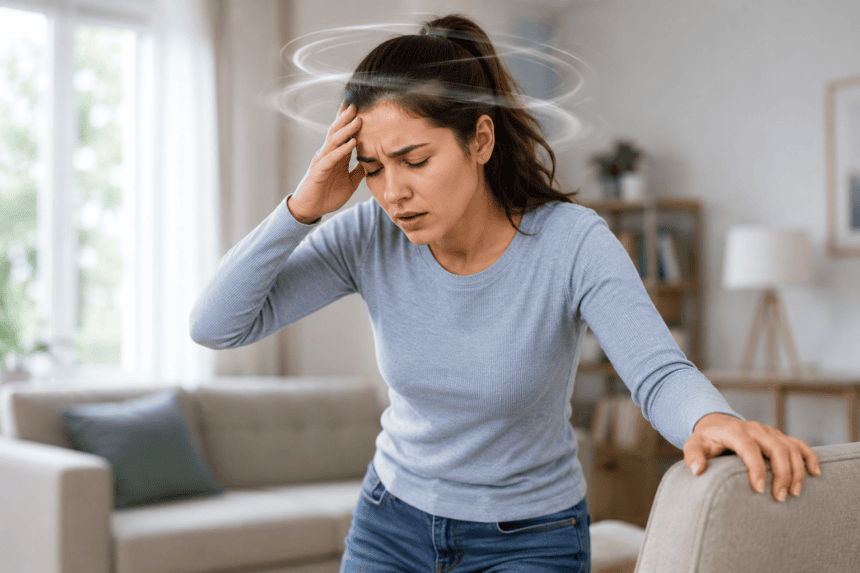
You stand up after sitting for a long time and suddenly feel as if you’re going to fall.
Your vision may become blurry. Your head may feel light. You may need to hold onto something for a few seconds.
This temporary sensation is often related to a sudden change in blood pressure.
One possible cause is orthostatic hypotension, also known as postural hypotension.
What Happens When You Stand?
Gravity is constantly affecting blood circulation.
When you stand up, some blood temporarily moves toward your legs and abdomen.
Normally, your body immediately responds.
Blood vessels tighten and the heart adjusts its activity to maintain blood pressure and keep enough blood flowing to the brain.
If the response is too slow or insufficient, blood pressure can temporarily fall.
This can cause dizziness.
What Symptoms Can You Experience?
A person may experience:
- Lightheadedness
- Blurred vision
- Weakness
- Dizziness
- Feeling faint
- Confusion
- Fatigue
- Temporary loss of balance
- Fainting in more severe cases
Symptoms often occur soon after standing and may improve once the body adjusts.
Why Does Dehydration Cause Dizziness?
Water contributes to blood volume.
When you’re dehydrated, there may be less fluid circulating through the bloodstream.
That can make it more difficult for the cardiovascular system to maintain blood pressure when you stand.
This is why dizziness may be more common after:
- Heavy sweating
- Vomiting
- Diarrhea
- Not drinking enough fluids
- Spending time in very hot weather
Why Can Heat Make It Worse?
Heat causes blood vessels near the skin to widen so your body can release heat.
This can contribute to lower blood pressure.
Standing suddenly in a hot environment may therefore make some people feel particularly lightheaded.
Can Medicines Cause It?
Yes.
Certain medicines can contribute to low blood pressure or interfere with the body’s ability to adjust blood pressure when changing position.
If dizziness begins after starting a new medicine, don’t stop the medication on your own. Discuss the symptoms with your healthcare provider.
Why Are Older Adults More Vulnerable?
The body’s blood-pressure regulation systems can become less responsive with age.
Older adults are also more likely to take medications or have health conditions that affect blood pressure.
Because dizziness can increase fall risk, recurrent episodes deserve attention.
How Can You Prevent Dizziness?
Stand Up Slowly
Don’t immediately jump out of bed.
Instead:
Lie down → sit up → wait a moment → stand.
Stay Hydrated
Drink enough fluids according to your individual needs and medical advice.
Move Before Standing
Moving your ankles or tightening your leg muscles before standing can encourage circulation.
Avoid Sudden Position Changes
Give your body time to adjust when moving from lying down to sitting or standing.
When Should You See a Doctor?
Occasional brief dizziness can happen to healthy people.
However, frequent or severe episodes need evaluation.
Contact a healthcare professional if:
- You repeatedly feel dizzy when standing.
- You frequently feel as though you might faint.
- You actually faint.
- You fall because of dizziness.
- Symptoms are becoming more frequent.
- You experience chest pain or breathing difficulty.
- You develop unusual weakness or confusion.
Mayo Clinic notes that loss of consciousness, even briefly, warrants medical attention, particularly when episodes are unexplained or recurrent.
Final Takeaway
That sudden dizzy feeling after standing happens because your body has to rapidly adjust blood circulation against gravity.
Sometimes the cause is simple, such as dehydration or standing too quickly. But repeated episodes can sometimes indicate an underlying medical or medication-related problem.