Your skin is the body’s largest organ, and although many skin changes are completely harmless, certain changes can sometimes provide clues about what’s happening inside the body.
Dermatologists can sometimes recognize signs of dehydration, hormonal changes, nutritional problems and systemic disease by examining the skin. However, a skin change alone cannot diagnose an internal illness.
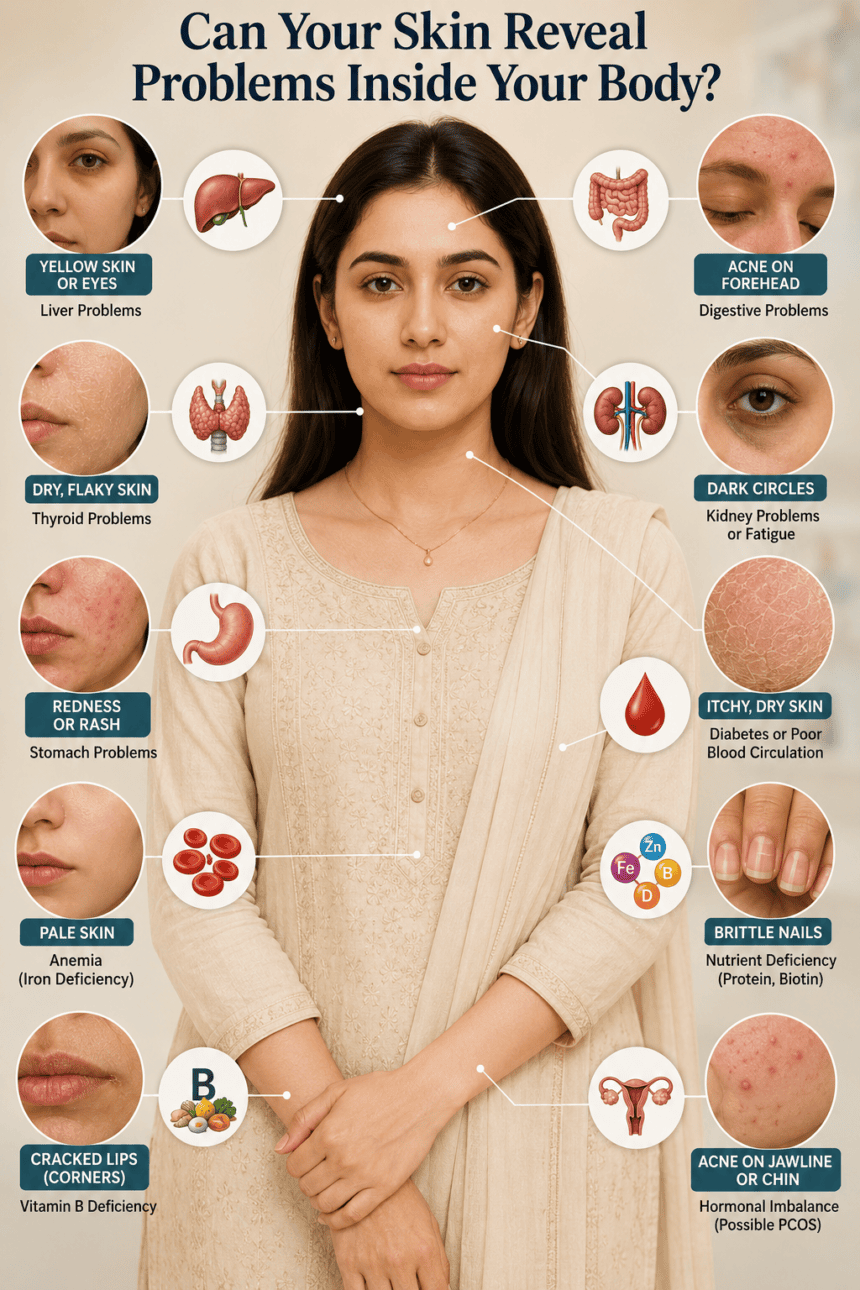
1. Yellowish Skin or Eyes — Liver or Other Problems
A yellowish appearance of the skin can sometimes be associated with problems involving the liver or bile system. Yellow-orange skin discoloration can also occur with certain kidney-related conditions.
If yellowing appears suddenly or is accompanied by other symptoms, it should be medically evaluated rather than assumed to be a simple skin issue.
2. Persistent Itching — Several Possible Causes
Constant itching without an obvious rash can sometimes be associated with internal conditions, including liver disease, kidney disease, diabetes and certain blood disorders.
This does not mean that every itchy patch indicates an organ problem. Dry skin, allergies, eczema and many other common conditions are much more frequent causes.
3. Very Dry Skin — Possible Dehydration
Dry skin can occur for many reasons, including weather, frequent bathing and skin conditions. But it can also be a clue that the body is not adequately hydrated. The American Academy of Dermatology notes that sunken-looking skin around the eyes and dry skin can occur with dehydration.
4. Sudden or Severe Acne — Hormonal Changes
Acne is common, but new or unusually severe acne, particularly in adulthood, can sometimes be associated with hormonal abnormalities. One example is polycystic ovary syndrome (PCOS).
5. Brown or Darkened Areas — Circulation or Other Causes
Some areas of unusual pigmentation can occasionally provide clues about circulation or other underlying conditions. For example, the AAD notes that brown or tan spots on the shins can occur when blood circulation is poor.
6. Pale or Sallow Skin
Changes toward a pale, grayish or sallow appearance can have many explanations, ranging from lifestyle factors to underlying illness. Skin color alone isn’t enough to determine the cause, but a persistent unexplained change deserves attention.
Important: Your Skin Is a Clue, Not a Diagnosis
It’s tempting to look at a particular skin change and immediately connect it to one organ. In reality, the same skin symptom can have many different causes.
Persistent itching, unexplained yellowing, major changes in pigmentation, or other unusual symptoms should be discussed with a healthcare professional. A proper evaluation may involve your medical history, physical examination and, when necessary, laboratory tests.
Your skin can sometimes provide an important window into your overall health, but it should be viewed as one piece of the larger picture—not as a standalone diagnostic test.