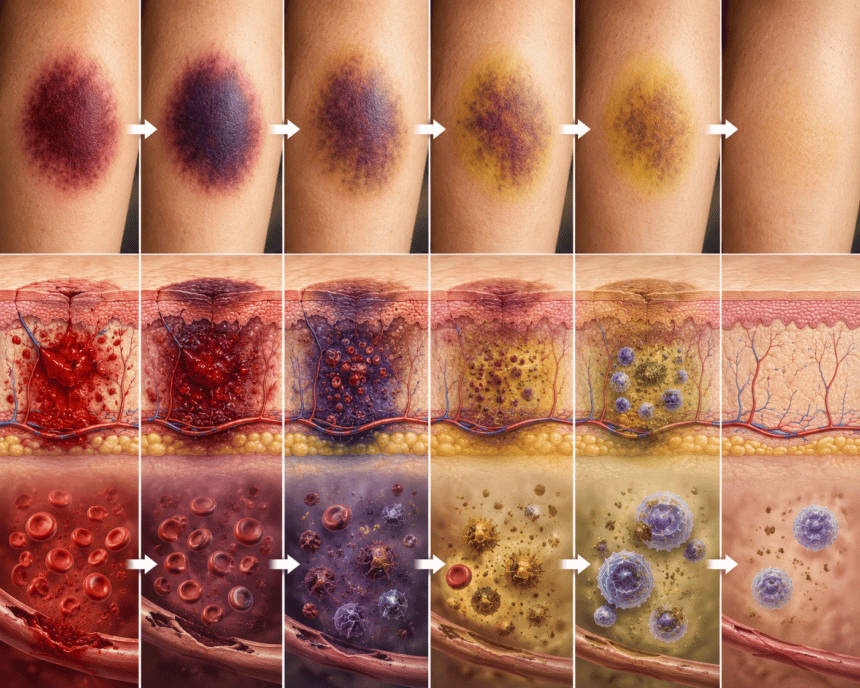
A bruise can look completely different from one day to the next. It may start as red or purple, become blue or dark black, then turn green, yellow, and eventually disappear.
This dramatic color transformation is not random. It happens because the body gradually breaks down and removes blood that has leaked from damaged blood vessels.

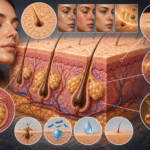
A bruise, medically known as a contusion, usually occurs when an impact damages small blood vessels beneath the skin.
The vessels may break without causing an open wound.
Blood then leaks into surrounding tissues.
Because the blood is trapped beneath the skin, it becomes visible as a colored patch.
The color depends on factors including the depth of the blood, skin characteristics, lighting, and how the blood pigments are changing over time.
Why Is a Fresh Bruise Red or Purple?
Immediately after an injury, leaked blood contains a large amount of hemoglobin.
Hemoglobin is the protein inside red blood cells that carries oxygen.
Fresh blood can appear red, while blood trapped under the skin may appear dark red, purple, or bluish because of the way light interacts with the tissue above it.
As time passes, the body’s cleanup process begins.
Why Does It Become Blue or Dark?
As red blood cells remain outside the blood vessels, they begin breaking down.
The surrounding tissue and immune system gradually process the damaged cells.
The hemoglobin inside them also undergoes chemical changes.
These changes contribute to the darker blue, purple, or black appearance often seen during the early stages of a bruise.
Where Does the Green Color Come From?
As hemoglobin is broken down, it produces several different pigments.
One of them is biliverdin, which has a greenish color.
When biliverdin accumulates in the injured tissue, the bruise may take on a green appearance.
This is a sign that the body is actively processing the blood products left behind after the injury.
Why Does the Bruise Turn Yellow?
Further breakdown of hemoglobin produces bilirubin, a yellow pigment.
As the body continues clearing the damaged blood, yellow and sometimes brownish colors can become more noticeable.
The edges of a bruise may begin changing color before the center.
Eventually, the pigments are removed or processed and the skin returns to its normal appearance.
Why Does a Bruise Fade?
Specialized cells and the lymphatic system help remove damaged blood cells and their breakdown products.
The body gradually clears the pigments from the affected tissue.
As less pigment remains, the visible bruise becomes lighter.
Most ordinary bruises disappear over a period of days to a few weeks, depending on their size and location.
Why Do Some People Bruise More Easily?
Bruising can vary from person to person.
Age, skin thickness, certain medications, nutritional factors, and repeated minor injuries can influence how easily someone develops bruises.
Older adults may bruise more easily because the skin becomes thinner and the protective tissue beneath it changes.
Frequent unexplained bruising, unusually large bruises, or bruising accompanied by other symptoms may warrant medical evaluation.
The Bottom Line
A changing bruise is essentially a visible record of the body’s cleanup process.
Red blood cells escape damaged vessels, hemoglobin breaks down into different pigments, and the immune and lymphatic systems gradually remove the remains.
The familiar sequence of purple, blue, green, yellow, and fading skin is therefore a fascinating example of the body’s natural healing process.