Many people think of skin oil as a problem. Oily skin can make the face look shiny, contribute to clogged pores, and sometimes worsen acne.
But the oil produced by your skin has an important biological purpose.
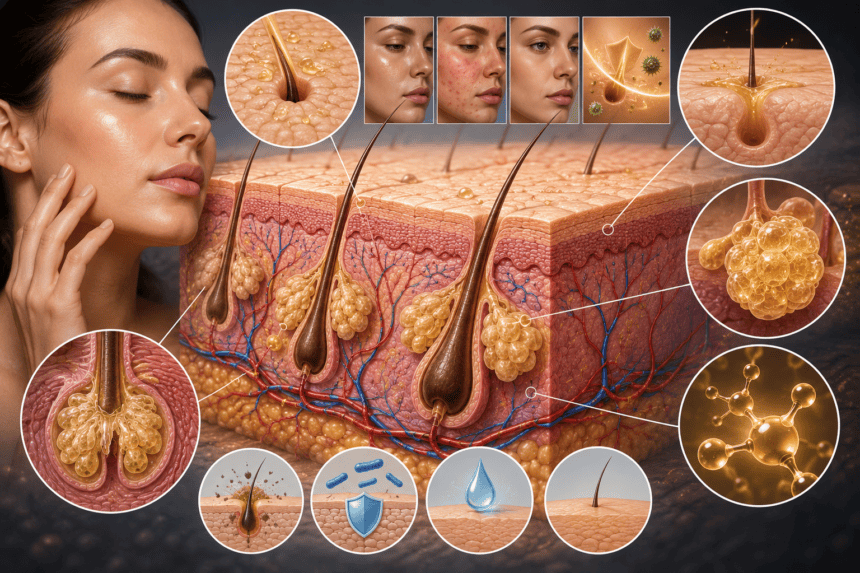
This natural oil is called sebum, and it is produced by tiny glands connected to hair follicles.
Without sebum, the skin would have a much harder time maintaining its protective barrier.


What Is Sebum?
Sebum is an oily substance made primarily by sebaceous glands.
These glands are found throughout much of the skin, although they are especially abundant on areas such as the face, scalp, chest, and upper back.
Sebum contains a mixture of lipids and other substances.
Once produced, it travels through the hair follicle and reaches the skin surface.
Why Does Your Skin Need Oil?
One of the major functions of sebum is helping maintain the skin’s surface barrier.
The outer layer of the skin helps prevent excessive water loss and protects underlying tissues from environmental exposure.
Sebum contributes to the mixture of oils and lipids on the skin surface, helping keep the skin flexible rather than excessively dry.
It also helps reduce the effects of friction.
Does Sebum Protect Against Microorganisms?
The skin is constantly exposed to bacteria, fungi, viruses, pollutants, and other environmental factors.
Sebum contributes to the skin’s chemical environment and interacts with other components of the skin barrier and microbiome.
Some components of sebum have antimicrobial properties.
However, sebum is only one part of the skin’s defense system. The skin barrier, immune system, sweat, and beneficial microorganisms also contribute to protection.
Why Does the Skin Sometimes Produce Too Much Oil?
Sebum production is influenced by hormones.
Androgens, a group of hormones that includes testosterone-related hormones, can stimulate sebaceous glands.
This is one reason oil production often increases during puberty.
Genetics also play a role. Some people naturally have more active sebaceous glands than others.
Stress and certain hormonal changes may also influence oil production in some individuals.
Why Is the Face Often More Oily?
The face contains many sebaceous glands, particularly around the forehead, nose, and chin.
This area is commonly called the T-zone.
Because of the concentration of sebaceous glands, the face can become oily more quickly than areas such as the arms or legs.
The scalp is another area where sebum production can be noticeable.
How Is Oil Connected to Acne?
Sebum itself is not the only cause of acne.
Acne can develop when hair follicles become blocked by a combination of oil, dead skin cells, and other material.
Changes in the follicle can encourage the growth of certain skin bacteria and trigger inflammation.
This can result in blackheads, whiteheads, pimples, or deeper inflammatory lesions.
Therefore, completely eliminating skin oil is not the goal.
Can Washing Too Much Remove Natural Oil?
Excessive cleansing or harsh products can strip away surface oils and irritate the skin.
When the skin becomes dry or irritated, it may feel uncomfortable and its protective barrier can become disrupted.
A gentle cleansing routine is generally preferable to repeatedly trying to remove every trace of oil.
What Happens as We Age?
Sebum production often changes with age.
During adolescence and early adulthood, hormonal activity can make the sebaceous glands particularly active.
Later in life, oil production may decrease for many people, contributing to drier skin.
This is one reason skincare needs can change throughout life.
The Bottom Line
Skin oil is not simply something that needs to be removed.
Sebum helps maintain the skin’s surface environment, supports the protective barrier, reduces dryness, and contributes to the skin’s natural defense system.
The goal of healthy skincare is therefore balance—removing excess oil and impurities without unnecessarily damaging the skin’s natural protective layer.