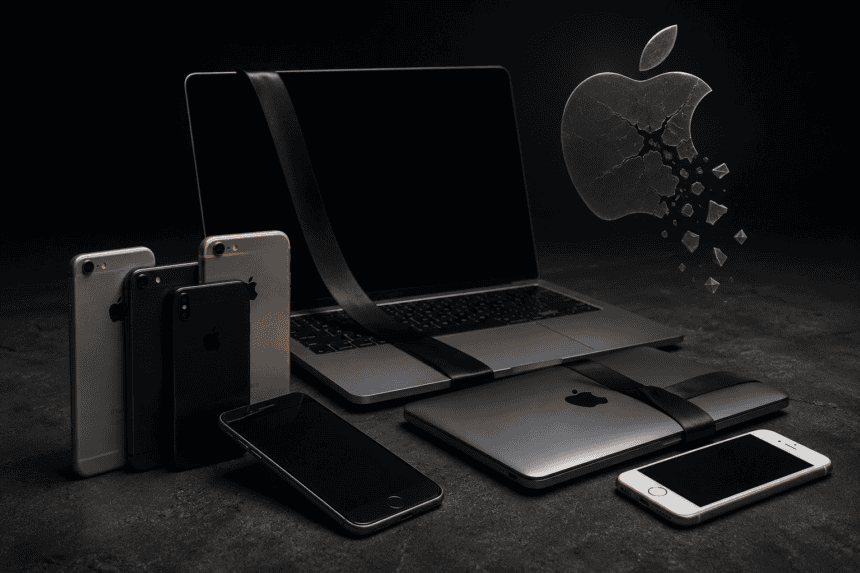
Apple has officially pulled the plug on support for several aging devices, moving a collection of iPhones and MacBooks to its “obsolete” list. This designation marks the end of the road for hardware repairs and parts availability at Apple Stores and authorized service providers.
The tech giant updated its support documentation this week to include the iPhone 6s Plus and iPhone 6s—specifically the 32GB storage models—in the obsolete category. Alongside these handsets, the company has officially retired the 2015-era 12-inch MacBook, a device that once served as the experimental vanguard for Apple’s ultra-portable design language.
For owners of these devices, the change is final. Apple’s policy dictates that once a product hits the seven-year mark since its last distribution, it is considered obsolete. Company-owned retail locations and third-party repair partners will no longer order parts for these units, effectively forcing users to rely on independent repair shops that may still have access to third-party components.
The 12-inch MacBook’s transition is particularly notable for hardware enthusiasts. Introduced in 2015, the machine was the first to feature the controversial “butterfly” keyboard mechanism and a single USB-C port, design choices that defined Apple’s laptop trajectory for nearly half a decade. While it was praised for its portability, the keyboard’s mechanical failures eventually led to a massive class-action settlement, making this retirement a quiet end to a contentious chapter in Apple’s design history.
Similarly, the iPhone 6s and 6s Plus remain among the most durable handsets the company ever produced, having supported iOS updates for nearly seven years. With the release of iOS 16, Apple finally dropped support for the 6s series, and this new obsolete status serves as the final administrative step in retiring the hardware entirely.
For those still holding onto these devices, the risk isn’t just a lack of repairs. Obsolete hardware no longer receives security patches, leaving these phones and laptops vulnerable to emerging exploits. While the hardware may still function, it effectively becomes a digital liability for anyone handling sensitive data or banking information.
Apple has not issued a formal statement regarding the update, as these transitions are standard procedure in the company’s product lifecycle. If you are still using one of these models as your daily driver, the time for an upgrade has arrived.