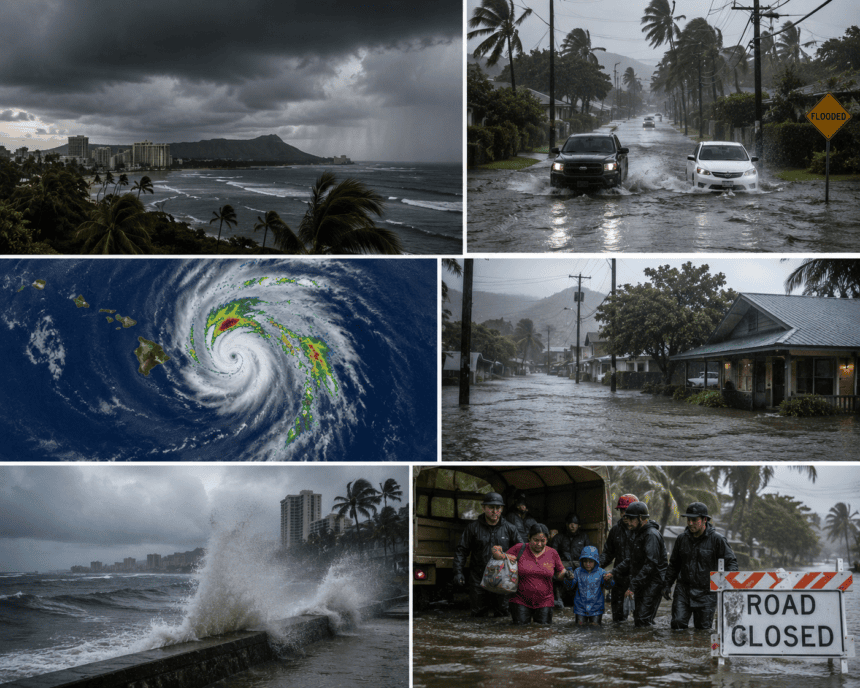
Hurricane Lala has lost its hurricane-force winds, downgrading to a tropical storm as it moves away from the Hawaiian Islands. While the sustained winds have dropped to 65 mph, the danger is far from over for residents on the Big Island and Maui.
The National Weather Service extended flash flood warnings through Tuesday morning. Even as the core of the storm shifts northwest, the outer rain bands are dumping heavy, persistent rainfall on mountain slopes that are already saturated.
Emergency management officials reported localized landslides in North Kohala, forcing the closure of two major arterial roads. Power crews are struggling to reach nearly 12,000 customers still in the dark, as downed trees and standing water make rural access points impassable.
“The wind is down, but the water is rising,” said Hawaii County Civil Defense administrator Talmadge Magno. “We are telling people to stay off the roads. Your vehicle is not a boat, and these flash floods are unpredictable.”
Meteorologists are keeping a close watch on the storm’s slow forward speed. Because Lala is moving at only 5 mph, it is effectively dumping hours of continuous rain on the same geographic areas. This “training” effect—where rain clouds continuously pass over the same spot—is the primary driver behind the record-breaking water levels seen in Hilo.
State authorities have opened four emergency shelters. While no major injuries were reported by early Tuesday, search and rescue teams remain on standby for residents trapped in low-lying areas near stream banks.
The storm is expected to dissipate into a depression by Wednesday night. For now, the focus remains on the rivers and streams that have yet to crest.