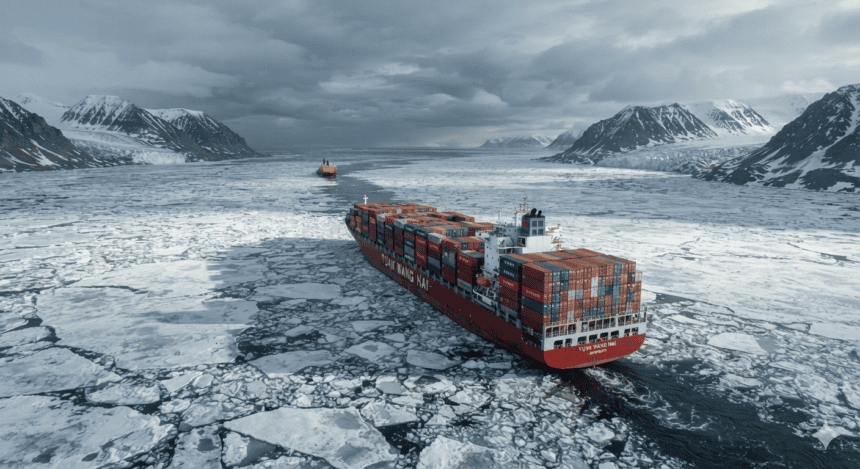
The Chinese icebreaker *Xue Long 2* has emerged from the Arctic, completing a transit that signals more than just a shorter shipping route. By navigating the Northern Sea Route, Beijing is transforming a seasonal curiosity into a strategic corridor, testing the limits of international maritime norms as the polar ice cap continues to thin.
This isn’t merely about cutting transit time between Shanghai and Europe. While the route shaves roughly 20% off the traditional journey through the Suez Canal, the operational costs remain high. Insurance premiums, ice-class vessel requirements, and the need for Russian icebreaker escorts turn this “shortcut” into a logistical headache for any private shipping firm. For Beijing, however, the math is different.
The mission serves as a dual-purpose demonstration. By operating in waters traditionally dominated by Russia and scrutinized by the West, China is asserting its status as a “near-Arctic state.” It’s a label the Kremlin has tolerated—for now—as its own economy leans heavily on Beijing for trade. But as the ice recedes, the geopolitical friction is rising. Washington and its NATO allies view this increased presence not as a commercial expansion, but as a strategic encroachment into the High North.
“Beijing isn’t looking for a quick profit on a single cargo load,” said a maritime policy analyst familiar with Arctic logistics. “They are mapping the seabed, testing satellite communications in the region, and normalizing their presence before the route becomes commercially viable for everyone else.”
The *Xue Long 2* mission underscores a shift in how major powers view the Arctic. It is no longer just a scientific frontier or a pristine wilderness; it is a future theater of competition. China is betting that by establishing a footprint today, it secures a seat at the table when the region’s vast, untapped mineral resources become accessible.
For the shipping industry, the reality remains stark. Without reliable, year-round infrastructure, the Northern Sea Route stays a niche path for state-backed ventures. Yet, the message has been delivered. Beijing has shown it can bypass traditional chokepoints, and in the high-stakes game of global trade, that kind of strategic agility is exactly what they’re paying for.