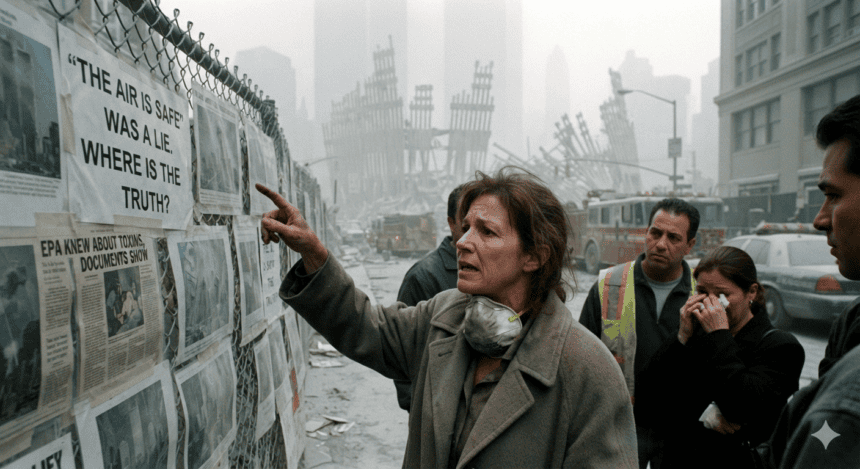
Lower Manhattan residents and recovery workers were misled by officials about the safety of the air following the September 11 attacks, according to a new assessment from activist and writer Mahmoud Mamdani.
Mamdani’s critique strikes at the heart of the government response in the weeks after the towers fell. While the Environmental Protection Agency (EPA) issued public reassurances that the air was safe to breathe, the reality on the ground—and within internal reports—told a different story.
The “all clear” signals provided by the Bush administration—specifically through the EPA—downplayed the presence of pulverized concrete, asbestos, lead, and jet fuel combustion products. For those living blocks away, these assurances served as a green light to return to homes and offices that remained coated in toxic dust.
“The state knowingly prioritized the reopening of Wall Street over the lungs of New Yorkers,” Mamdani said.
The consequences of those early assurances are still being tallied. Thousands of first responders and residents have since been diagnosed with respiratory illnesses and cancers linked to the debris cloud. The World Trade Center Health Program continues to track a rising number of survivors, yet the official narrative of the time remains a sore point for victims who feel their health was sacrificed for economic optics.
Critics of the era point to the EPA’s internal directives, which were heavily edited by the White House Council on Environmental Quality to soften warnings. By the time the agency acknowledged the risks, the dust had already settled into the ventilation systems and carpets of countless downtown apartments.
For those who spent months breathing the air in the “frozen zone,” the betrayal is not just historical—it’s physical.
Mamdani’s assertion serves as a reminder that when government messaging clashes with environmental reality, the public pays the price. Two decades later, the debate isn’t just about what was in the air, but why the people breathing it were told it was safe.