El Niño is back. The Pacific Ocean’s surface temperatures have breached critical thresholds, signaling the onset of a climate phenomenon that historically triggers extreme weather across the globe. Meteorologists confirm this shift is not just a seasonal fluctuation but a sustained transition that will likely disrupt agriculture, energy markets, and disaster management protocols through 2025.
The Pacific equatorial waters are currently holding temperatures significantly above the 30-year average. This heat reservoir acts as a massive atmospheric engine, pulling rainfall away from the western Pacific—impacting Australia and Southeast Asia—and dumping it across the Americas.
For farmers, the stakes are immediate. In regions like Brazil and Argentina, the shift often brings heavy, unpredictable rains that can ruin harvest cycles. Conversely, parts of India and Indonesia are bracing for the opposite: prolonged dry spells that threaten rice and wheat yields. Global food prices remain volatile; any significant disruption to these breadbaskets will ripple through grocery store shelves within months.
Energy markets are reacting too. Heatwaves associated with El Niño drive massive spikes in electricity demand as cooling systems run at maximum capacity. Utility companies in North America and Europe are already recalibrating their load forecasts, wary of the strain on aging grids during peak summer months.
“We are moving into uncharted territory with the current baseline temperatures,” said a senior climatologist at the World Meteorological Organization. “The interaction between human-induced warming and the El Niño cycle is creating a compounding effect that we haven’t fully modeled in the past.”
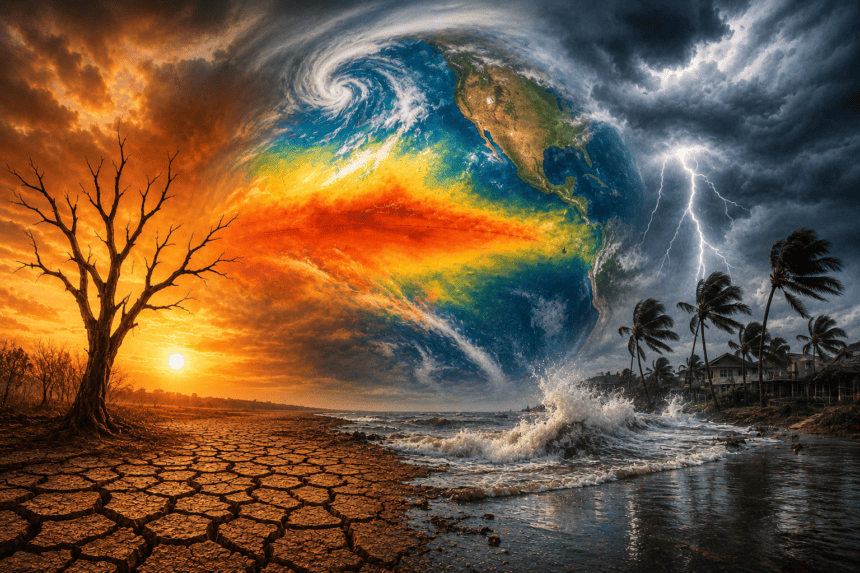
The pattern isn’t just about heat. It’s about the intensity of extreme events. Expect stronger hurricanes in the Pacific and more frequent flash flooding in coastal areas that were already struggling with rising sea levels.
Governments are shifting from monitoring to emergency readiness. In California and parts of the southern United States, infrastructure teams are clearing drainage systems and reinforcing flood defenses. They’ve learned from the 2015-2016 event—the last major super El Niño—which caused billions in damage and reshaped regional water policy.
The phenomenon is expected to peak late this year. Whether it settles into a moderate cycle or intensifies into a “super” event remains the primary concern for disaster response agencies worldwide. For now, the data is clear: the atmosphere is primed for disruption, and the window for preparation is closing.