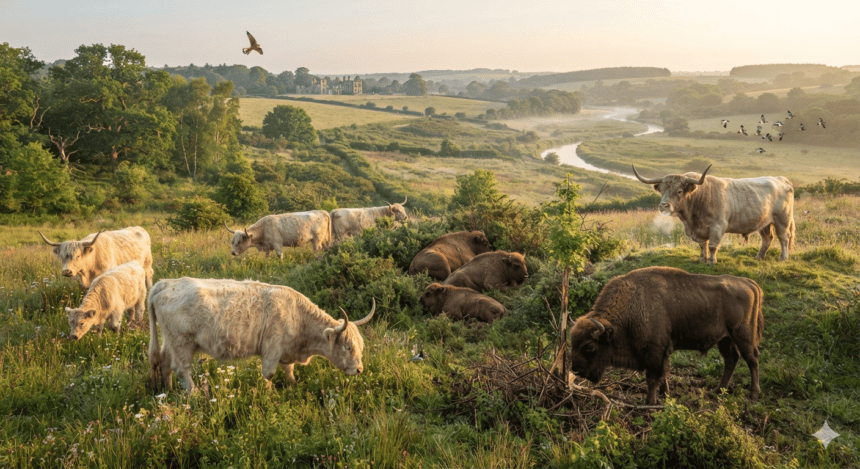
WEST SUSSEX, England — A herd of rare-breed cattle is currently doing more for the British countryside than a fleet of tractors. On the 3,500-acre Knepp Estate, these animals aren’t being raised for beef or dairy; they are the primary architects of a radical rewilding project that has turned intensive farmland into a haven for endangered species.
The estate, once a struggling commercial farm, pivoted two decades ago to a nature-led approach. By introducing Old English Longhorn cattle—a breed that closely mirrors the wild aurochs that once roamed Europe—conservationists are mimicking the natural grazing patterns that modern farming methods typically erase.
These cows don’t just eat grass. They create a mosaic of habitats. By grazing selectively, trampling vegetation, and wallowing in mud, they carve out niches for rare insects, birds, and flora. Where a mechanical mower creates a uniform field, a Longhorn creates a landscape of high and low growth, providing essential shelter for the purple emperor butterfly and the nightingale.
“We stopped trying to control the land and started letting the animals decide the shape of the habitat,” said a spokesperson for the project.
The strategy has yielded measurable results. Knepp now hosts the largest breeding population of turtle doves in the UK—a species that has largely vanished from the rest of the British landscape. The cattle act as “ecosystem engineers,” moving through the scrubland and keeping the canopy open, which prevents the land from reverting into a dense, lifeless thicket.
Unlike conventional livestock farming, this approach requires minimal human intervention. The cattle are left to fend for themselves year-round, feeding on the natural vegetation of the estate. This lack of artificial feed and routine medication has created a self-sustaining cycle where the animals’ own waste enriches the soil, fueling a recovery of fungi and dung beetles that had been absent from the area for years.
While critics of rewilding often point to the loss of agricultural output, the Knepp model suggests a different kind of productivity. The estate has transformed into a major center for ecotourism, proving that biodiversity can be a viable economic engine.
As the UK government faces mounting pressure to meet environmental targets, the sight of these long-horned cattle roaming the Sussex Weald offers a glimpse into a potential future. It is a quiet, slow-motion revolution, proving that sometimes the best way to manage the land is to step back and let the livestock lead.