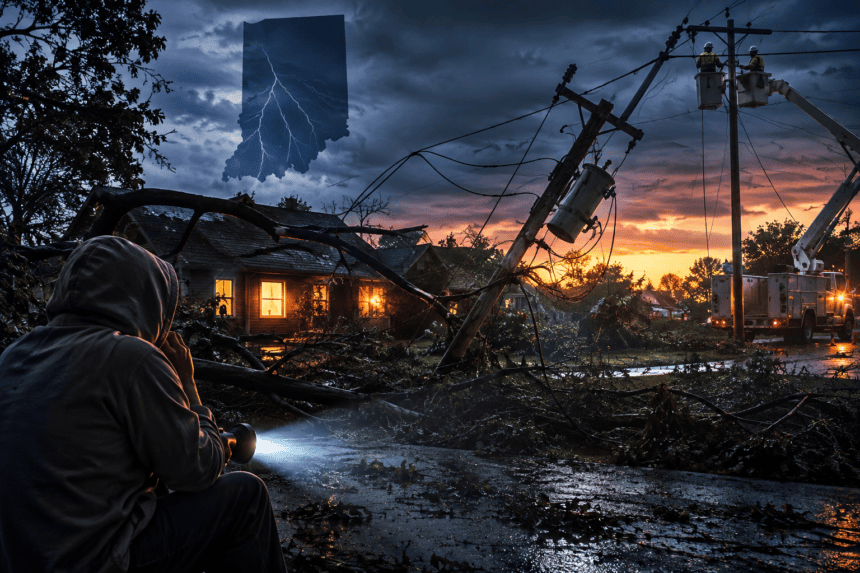
INDIANAPOLIS — Twelve days after a severe storm system tore through Indiana, thousands of residents remain in the dark. Utility crews are still navigating a landscape of downed transmission lines and shattered infrastructure, leaving neighborhoods in the state’s hardest-hit regions without heat or refrigeration as temperatures fluctuate.
For families in the affected counties, the initial frustration of the first few days has hardened into exhaustion. Local shelters report a steady stream of residents seeking warmth and phone charging stations, while community centers have transformed into distribution hubs for bottled water and non-perishable food.
Utility companies cite the sheer scale of the damage as the primary hurdle. The storms, which brought high-velocity winds and localized flooding, didn’t just snap a few poles; they leveled entire segments of the grid. Repair crews have been working 16-hour shifts, yet the geography of the rural outages—often located deep in debris-choked wooded areas—continues to slow progress to a crawl.
State officials have faced mounting pressure to explain the delay. While the governor’s office has emphasized the complexity of the repairs, critics point to a lack of investment in regional grid resilience. For those living in the affected zones, the political discourse matters less than the immediate reality of their situation.
“We’ve been living out of coolers since the 15th,” said Sarah Miller, a resident of a rural township just outside the capital. “You stop checking the app for updates when the estimated restoration time just keeps pushing back by another 24 hours.”
The financial toll is mounting alongside the physical one. Small business owners are reporting thousands of dollars in lost inventory, and homeowners are scrambling to manage frozen pipes as the mercury dips at night. While some utilities have promised a final push to restore service by the weekend, the history of this outage suggests those deadlines are fluid.
As the sun sets on the twelfth day, the silence in these neighborhoods remains heavy. For the thousands still waiting, the return of power isn’t a matter of convenience anymore—it’s the only way to get their lives back to a semblance of normal.