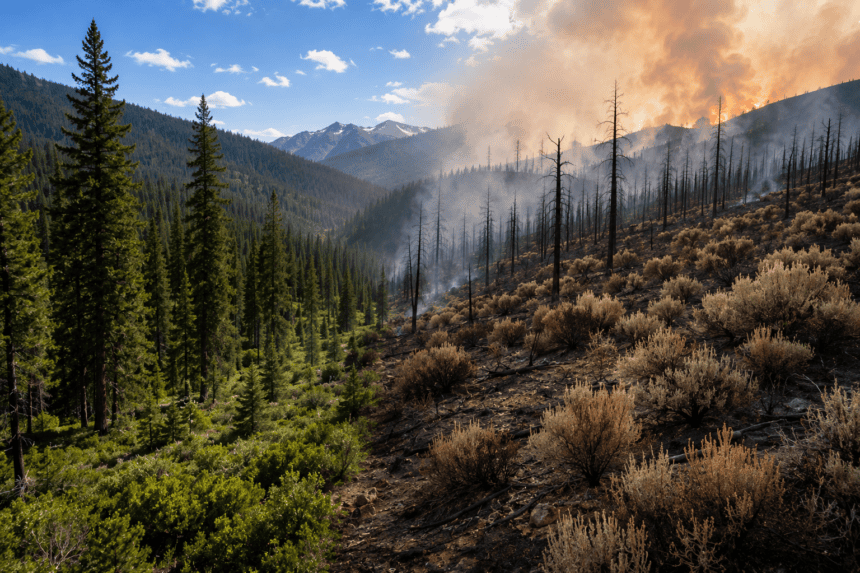
The American West is losing its forests. Intense, recurring wildfires are burning with such ferocity that once-dense coniferous stands are failing to bounce back, leaving behind sun-baked shrublands instead of saplings.
Ecologists tracking the shift say the cycle is broken. Historically, fire acted as a reset button for forests, clearing out underbrush and allowing pine and fir seeds to take root in the exposed mineral soil. Today, the heat is too intense and the intervals between fires too short. Trees that once took decades to mature are being incinerated before they can produce their first cone crop.
“We aren’t just seeing a temporary disturbance,” said Dr. Sarah Miller, a forest ecologist who has spent years monitoring burn scars across the Rockies. “We are seeing a permanent transition. The climate is warmer and drier than it was forty years ago, and the forests simply can’t keep up with the new pace of fire.”
Data from recent surveys in Colorado, New Mexico, and California show that in nearly 30% of high-severity burn areas, natural regeneration has stalled completely. Without the canopy cover of mature trees, the soil dries out faster. Grasses and shrubs move in, creating a new, highly flammable fuel bed that invites the next fire even sooner.
The implications for the region go beyond the loss of timber. These forests act as massive carbon sinks and critical watersheds for millions of people. When they turn to scrub, the land loses its ability to hold snowpack, leading to earlier spring runoff and increased erosion.
Federal land managers are now facing a difficult choice: let the landscape shift or intervene. Some agencies are experimenting with “assisted migration”—manually planting tree species that are better suited for a warmer, drier climate—but the scale of the destruction dwarfs current budgets and staffing.
For the residents of these mountain communities, the scenery they grew up with is vanishing. The deep, dark woods are being replaced by open, low-lying brush, and the trend shows no sign of slowing. The question is no longer how to stop the fires, but whether the forests of the West can survive the new reality they have created.