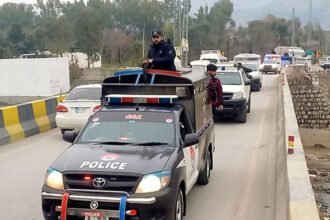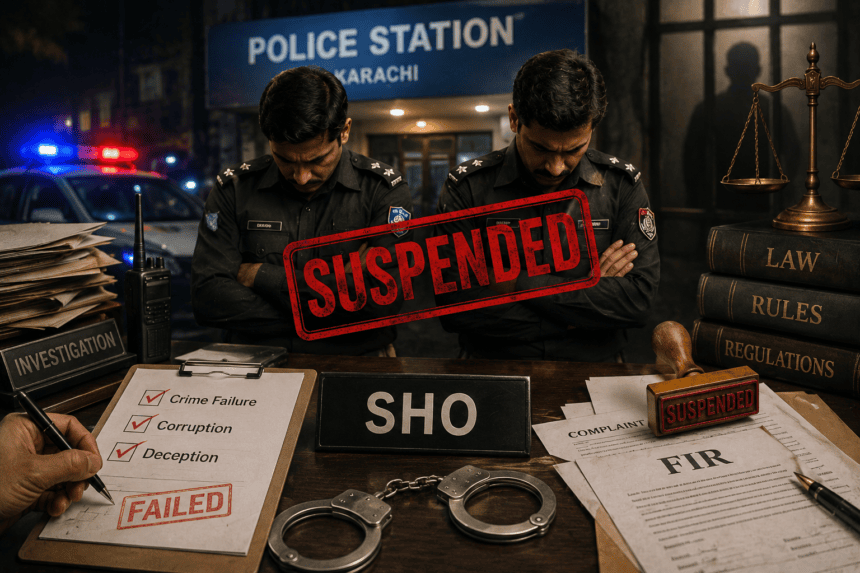
Karachi police leadership suspended the station house officers (SHOs) of Preedy and Jackson Market on Thursday, citing widespread allegations of corruption and a complete failure to curb street crime in their respective jurisdictions.
The move comes after a series of intelligence reports reached the Central Police Office (CPO), detailing how both officers allegedly turned a blind eye to criminal syndicates in exchange for monthly kickbacks. For residents in these high-traffic commercial zones, the suspensions confirm what they have long suspected: the police weren’t just failing to stop the crime—they were facilitating it.
“We have zero tolerance for officers who prioritize their own pockets over public safety,” said a senior official familiar with the internal investigation. He confirmed that both SHOs were relieved of their duties immediately, pending a departmental inquiry that could lead to permanent dismissal.
The allegations against the Preedy SHO involve a long-standing pattern of “protection money” collected from local businesses. Sources within the force claim the officer maintained a list of vendors who paid a weekly fee to avoid police harassment, effectively creating a parallel tax system that left street vendors vulnerable to actual criminals.
The Jackson Market case carries more weight regarding public order. Despite a sharp rise in mobile snatching and motorcycle theft over the past three months, the station recorded zero arrests for organized gang activity. Internal audits revealed that the SHO falsified daily crime logs to keep official figures artificially low, misleading senior command about the reality on the ground.
These suspensions are part of a broader, aggressive push by the city’s top brass to overhaul a department struggling with credibility. While the move signals a shift in accountability, critics argue it is merely a “revolving door” policy. They point to the fact that similar suspensions have occurred in the past, yet the systemic issues—under-resourced stations and political interference—remain untouched.
For now, the two officers are off the payroll and under investigation. Whether this leads to a genuine cleanup or just a temporary optics maneuver depends on how the department handles the upcoming criminal proceedings against them.
As of Thursday evening, the CPO has appointed interim replacements, tasking them with clearing the backlog of ignored complaints within the next 48 hours.