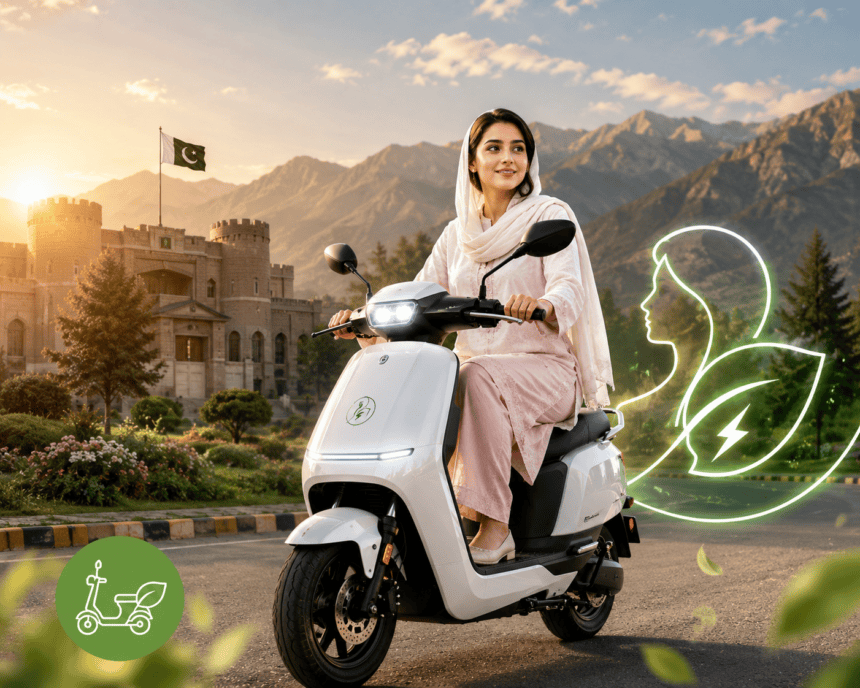
PESHAWAR — The Khyber Pakhtunkhwa provincial government has greenlit a plan to provide free electric scooters to working women and students, aiming to improve mobility and economic participation in a region where public transport options for women remain limited.
Chief Minister Ali Amin Gandapur approved the project during a cabinet meeting on Tuesday. The initiative, dubbed the “Women’s Mobility Project,” targets women who commute daily for education or employment. Officials believe the shift to electric vehicles will not only ease the financial burden of rising fuel costs but also offer a cleaner, more reliable mode of transit.
The move comes as the provincial government faces pressure to address the gender gap in the workforce. In many parts of the province, women rely on expensive private transport or family members to get to work. These scooters are intended to bridge that gap, giving women a measure of independence they previously lacked.
“We aren’t just giving away a vehicle; we’re cutting the cord on the transport barriers that keep women at home,” a senior official in the Chief Minister’s secretariat told reporters. He declined to provide specific details on the procurement process, noting only that the tender for the electric scooters would be issued “within weeks.”
The project will be rolled out in phases, starting with major urban centers like Peshawar, Mardan, and Abbottabad. Eligibility criteria are still being finalized, but government sources suggest priority will be given to women from low-income backgrounds and those traveling long distances for their daily commute.
Critics, however, have already pointed to the lack of dedicated charging infrastructure across the province. Without a network of charging stations, the utility of electric scooters in rural or underserved areas remains an open question. The government has yet to announce a budget for the infrastructure side of the policy.
For the thousands of women navigating the city’s crowded and often unreliable public buses, the announcement offers a rare glimmer of practical support. Whether the program reaches those who need it most, however, depends entirely on the transparency of the distribution process — a hurdle that has derailed similar government schemes in the past.