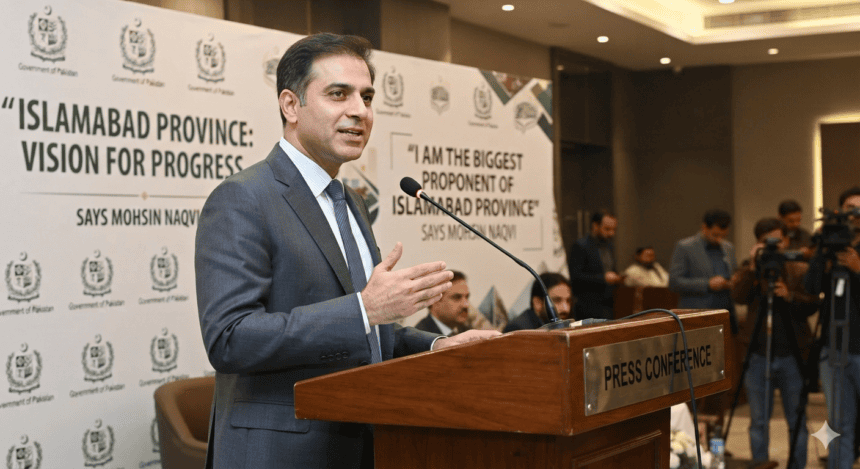
Interior Minister Mohsin Naqvi has publicly aligned himself with the push to grant Islamabad provincial status, arguing that the capital’s current administrative structure is outdated and inefficient.
Speaking in the Senate, Naqvi positioned himself as the leading proponent of the proposal. He argued that transitioning the capital to a province would streamline decision-making, cut through the red tape currently hindering development projects, and provide local residents with a more direct say in governance.
The proposal—a long-standing point of contention in Pakistani politics—has gained fresh momentum as the federal government struggles with the logistical challenges of managing a rapidly expanding capital. Critics of the current system point to the overlapping jurisdictions of the Capital Development Authority (CDA) and the Islamabad Capital Territory (ICT) administration as a primary driver of urban mismanagement.
Naqvi’s endorsement carries significant weight given his dual role as Interior Minister and his previous tenure as caretaker Chief Minister of Punjab, where he oversaw major infrastructure overhauls. By leaning into this shift, he is signaling a departure from the traditional centralized control that has defined Islamabad since its inception.
However, the path to provincial status is far from clear. The move requires a constitutional amendment, necessitating a two-thirds majority in Parliament—a threshold the current coalition government would struggle to meet without significant opposition support.
Legal experts and political analysts remain divided. Some suggest that provincial status could trigger a cascade of similar demands from other administrative units, potentially destabilizing the current federal setup. Others argue that the capital’s unique demographics and its role as the seat of the federal government make it a poor candidate for provincial autonomy.
For now, the minister’s statement serves as a trial balloon in a political climate already crowded with constitutional debates. Whether this evolves into a formal legislative agenda or remains a rhetorical shift depends on how quickly the government can build consensus among its coalition partners—and whether the opposition sees this as a genuine reform or a power play.