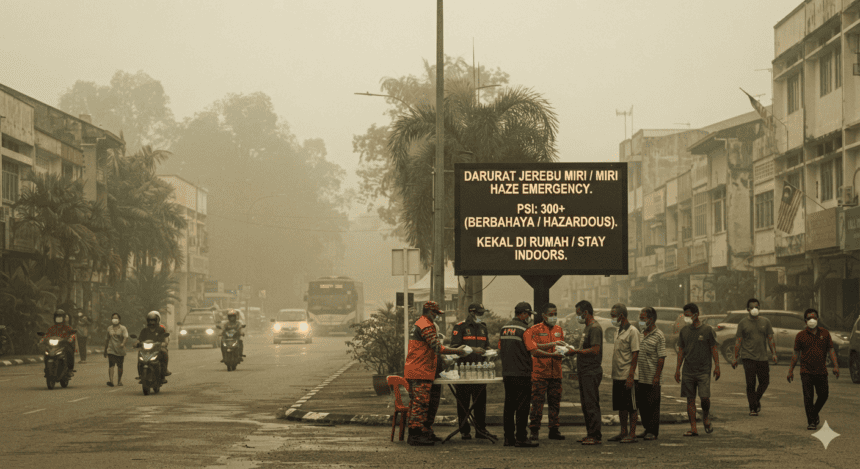
KUCHING — Thick, acrid smog has forced officials in Sarawak to close dozens of primary schools this week, as air quality levels in the Malaysian Borneo state plummeted to hazardous levels.
The haze, a recurring regional crisis, originated from hundreds of uncontrolled peatland fires across Indonesian Kalimantan. Prevailing south-easterly winds have driven the smoke across the border, trapping residents in a dense, grey shroud that has triggered a surge in respiratory complaints.
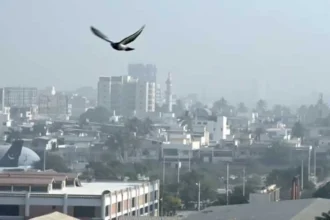
By Wednesday morning, the Air Pollutant Index (API) in Kuching breached the 200 mark — firmly in the “very unhealthy” to “hazardous” category. Visibility in parts of the city dropped below 500 meters, forcing motorists to drive with headlights on at midday.
“The air burns your throat the moment you step outside,” said Sarah Lim, a local teacher who spent the morning coordinating the evacuation of students from an elementary school in the city’s outskirts. “We’ve seen this before, but the speed at which it worsened this time caught everyone off guard.”
Sarawak’s Disaster Management Committee activated emergency protocols late Tuesday, distributing thousands of N95 face masks to high-risk groups. While the state government has urged residents to limit outdoor activities, the economic fallout is already mounting. Small businesses report sharp declines in foot traffic, and the regional aviation sector faces persistent delays as low visibility complicates landing procedures at Kuching International Airport.
Regional authorities remain locked in a familiar diplomatic standoff. Indonesian officials have largely attributed the fires to small-scale slash-and-burn farming, though environmental groups point to large-scale industrial palm oil plantations as the primary culprits. Despite years of ASEAN-led agreements on transboundary haze, the seasonal burning continues to defy regional enforcement.
For the residents of Kuching, the immediate concern isn’t policy — it’s breathing. With meteorological forecasts predicting dry conditions to persist through the weekend, the smoke isn’t expected to clear until the wind shifts or the monsoon rains finally arrive.
Until then, the city remains at a standstill. Schools stay locked, the streets stay empty, and the haze continues to hang heavy over the Borneo skyline.